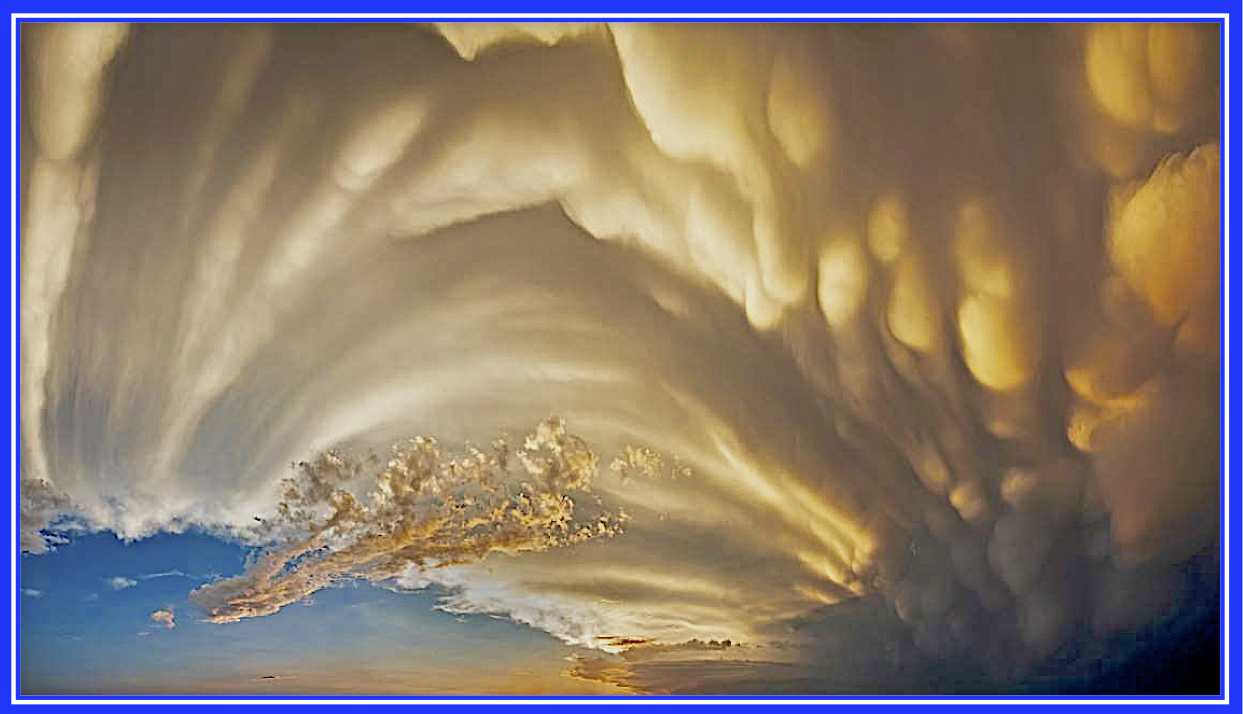
This Sunday morning service follows Supreme Council, which was in session last week. There were twelve individuals who attended all the sessions, as well as several more who were present at some. This is what happened in the external sense, but all who shared that same spirit, though they may not have been present in person, had the opportunity of being present in spirit. Clearly, to be effective and to allow things to work the way they really do, a smaller number of individuals would be required to meet in person. This does not make it an exclusive gathering, because all are welcome in spirit; and to the extent of purity of heart all shared in spirit.
What is really happening from the standpoint of the movement of the spirit of God may emerge somewhat out of the mists and be observed. There are no decisions to be made, because they are already made. Things are working the way they really work, whether as human beings we have been aware of it or not. What is required of us is to become aware of it and thus to participate in an effective way with what is consequently allowed to take form. We all have some experience of this, according to the extent of our own purity of heart. Human beings in the world as it has been find themselves seemingly under the necessity of making weighty decisions. This is all included in the sweat of the face, but it isn’t the real way.
The spirit moves. That movement determines what shall be. What shall be, of course, is modified by the way human beings behave and react, but such behavior and reaction are consequent upon the movement of spirit. The viewpoint of spirit, of course, is not blind to the way human beings are likely to behave and react, so it is all taken into account. But it may be clearly seen that when human beings stop behaving and reacting in their usual human ways the spirit will have a clear shot. Then what needs to occur naturally occurs, and all may participate in it easily and with delight.
We ourselves are in position to allow this to become known on earth in our own experience. There are others in other places, likewise, who are letting this occur, but the opportunity is open to everyone. What ease and naturalness and delight could be in the experience of all people on the face of the earth. It comes forth in some measure for us. If we find ourselves at times in difficulties it is because we produced those difficulties. We are all well aware of this. Someone else wasn’t responsible, just oneself.
So we have the opportunity of coming into line with the way things really are and the way things really work. That is the way of easiness, of naturalness and of delight. But the moment we try to make things work the way we humanly think they should we’re in trouble, and we begin to proliferate our difficulties and our so-called problems—all self-produced. What a great thing it is finally to take responsibility for the way things are in our own experience. Taking that responsibility, we are taking responsibility for the way things are in our worlds. But it takes a real man or a woman to do it.
The spirit is in motion. It always has been and always will be. That motion we have described in various terms. It is indeed the Word. Obviously, to know what the Word is in the moment it is necessary to hear it. There has been such a cacophony of noise humanly produced that the Word has not been heard at all by most human beings on the face of the earth. You know, we hear what we listen for. To hear the Word, we must listen for the Word. This ability to listen is important.
I recently had a letter from Hugh Malafry in which he emphasized this point. I would read a few sentences which are pertinent to our present consideration: “It is the heart that listens; the ears are agents only.” If this is so, then the purity or the impurity of the heart will determine what we hear. Then there is this short paragraph: “I wonder if we have ever really heard what there is to hear. Sometimes one hears complaints that we’ve heard it all so many times. I wonder if we’ve even heard it once, really, without imposing distortion upon what we’ve heard. The skill refines, thank God, or it would all be hopeless. But is it not time to really take stock of this simple capacity upon which so much depends—the ability to purely listen.”
It was written: “Out of the abundance of the heart the mouth speaketh.” But according to what is present in the heart the ear heareth. There has been the idea sometimes that there has been a good deal of repetition in what I have said, for instance. If this is true, I wonder why. Was it because I couldn’t have said anything else? Or was it because those who were present didn’t hear what I was saying, because they had never learned to listen? Obviously, in the world as we know it scarcely anyone ever listens to anyone else. In a way I suppose that’s all right, because no one else has much to say! But usually it is a matter of putting up with what other people are saying, waiting for a chance to say what you have to say—so on that basis no one ever listens to anyone else.
Presumably over the years we have been learning to listen in some measure but, as Hugh wrote in his letter, we may well wonder if we really heard what has been provided even once, because according to what is in the heart our ears have heard. And if our hearts have been impure we certainly haven’t heard the truth. We impose upon the Word what is present in our own hearts. This capacity to listen is dependent upon our hearts and the state of them. If it is to be pure listening, we must have pure hearts.
Yes, this capacity does refine if we are willing to let it. I’m sure that all of you have heard something said in a service, for instance, and later read it in printed form, discovering that you hadn’t seen at the time what you now saw. You may have heard, at a service, something which had been presented before, possibly in different terms—I usually try to make it more interesting that way, but I could, for the most part, have given the same service quite a number of times, because it wasn’t heard in the first place—but you may have heard something said again, and suddenly, as it has been put, “the penny drops,” and you think you understand. Well some impurity of heart may have slipped away but I doubt that the purity is absolute yet.
I have noted, over the years, people distorting what I have said, in their own ways, being quite sincere about it, not trying to cause trouble, but trouble has been caused thereby. It is unwise to repeat what you do not yet know. We are here to know the truth, and it is wise to be rather silent until we are in position to express it. We have in times past, probably more so than now, thought we knew so much and wanted to tell everybody about it. But what we knew wasn’t the truth. And if it wasn’t the truth, what was it?
We learn to listen. The listening is of a different kind; it is not merely hearing sounds in the ordinary way, but a listening to the spirit. Listen to that first, not being so concerned with the form. Very often those of rather simple understanding, but with open hearts, hear the soundless sound of the spirit with greater clarity than those with complicated intellects, because what is present in the intellect tends to be imposed upon what may be faintly sensed of the spirit. That is describable as blasphemy.
The vast majority of people can sense the spirit if they are open to listen for it. They can be moved by it, be delighted because of it, without necessarily understanding or giving form to what it is that the spirit may be conveying in the moment. In fact that is unnecessary for most people. If they are willing to move with the spirit of God because they listen for it, then there is the experience of life—life is found to be a song and a dance. One can hum the music of a song without knowing the words of it. One can dance without specifically being instructed as to where one should put one’s feet. As there is indeed a listening to spirit there is the movement in life—something natural, something wonderful, something easy, something delightful, something which is experienced and doesn’t have to be explained.
I think from the usual Emissary viewpoint it was thought very important that one should be able to explain everything to somebody. That usually confuses them. Rather, let them sense what the movement with life is because one is, oneself, moving with it. It wouldn’t be a particularly enjoyable experience, should one enjoy dancing, if every few steps you had to stop and explain, or be explained to, as to what it was that was happening. How much better just to enjoy the happening! And to the vast majority of people on earth this is all that is necessary. There are those, fewer in number, who rightly have a specific conscious awareness emerging out of the mists of human concept, so that they may give particular focus to the movement of life, the movement of life in form on earth. If we have awakened somewhat in this way, then we have a particular responsibility, fundamentally for our own movement and then for that which relates to the movement of the whole.
Life is very powerful, and once there is a conscious focus of life on earth then it increasingly has opportunity to move in an unconscious way for people everywhere. It has heretofore obviously been distorted and twisted and caused to take form in destructive ways. But finally, as there are those appearing on earth who are so aligned with the movement of life that the mists clear for them and they see what is happening, then direction is given for the movement of life as it is experienced through all who have at least somewhat open hearts. The closed heart will continue to make trouble for itself and for those who have closed hearts.
Now life begins to move under intelligent control within the range of human experience, that all may share in the wonder of it, not because they know exactly what is happening but because they discover, when they are aligned with life, how delightful it is. They discover the steps of the dance. They begin to hear the music of the dance. What a joyous and fulfilling experience! Most people don’t really want to know the ins and outs of it—just have the experience. It is necessary that some should begin to know something of the ins and outs of it, so that the music may be sustained and the basic steps of the dance brought into form.
During the Supreme Council there were those who were present, at any given session, who had some conscious awareness of what it was that was emerging out of the mist. They didn’t put it in the mist; it was there already. All that was necessary was for the mists to be dissipated in some measure in their own consciousness, so that it might be seen. Human beings have been so earnest, and determined to push their own views of things, usually with the best of intentions, failing utterly to comprehend that the truth is already present, that things are the way they are and are working the way they work. As there are those present on earth who begin to be in position to discern what it is that is coming out of the mists in this regard, then there may be alignment with the way things work and what it is that is actually happening, instead of trying to impose human determinations upon the truth, thereby bringing untold tribulation into the world—for this is exactly what has been being done for centuries, millennia. But now a clarification may come, and we have a responsibility to let it come.
We may discover that some of our brightest schemes have no value whatsoever. Is that going to be a shattering experience? Or is it going to be a delightful one? It is a delightful one if we discover what is really happening. Then we don’t need our brightest schemes anymore. We can participate in the truth, know the truth—but it requires that we listen. We can’t hear if we don’t listen, and we need to listen at a level which is beyond our schemes. If we have axes to grind, all we will hear is grinding axes, and that will utterly blot out what is there to be heard of the true spirit.
Listen! for the sound of many waters,
Listen! for the sound of the rushing wind,
Listen! for the sound of the silent earth,
Listen! for the sound of the radiant sun.
Listen!
YouTube Video
Let your ear be tuned to this sound because your heart is; for what is present in your heart will determine what you hear. Listen for the sounds of the spirit. These sounds have always been with us but we have had no ears to hear them, because we didn’t listen. All that has been offered over the years through these services is the opportunity to learn to listen to the sound of the spirit. Then there is no need for interpretation, which is invariably misinterpretation. But the Word is heard when you learn to listen. It is here present with us in this moment. It is in motion in this moment.
As our hearts and ears are attuned to that movement, then the rich substance of spirit may fill every part of our physical bodies. It may flow forth through every part, perhaps particularly through our arms, our hands, our fingers, but it floods through the flesh of our bodies. Do you think, if that is so, the physical form can remain the same? Would this not bring the reality of healing? Or do you think you are going to be healed by eating the right food, or by taking the right exercise? The spirit, the reality of life, pours forth when allowed to do so because we listen, and consequently hear, and so find natural attunement with the movement of spirit. Then the substance of spirit may fill our physical forms, our minds and our hearts and, pouring forth, fill the environment, so that the fire of God may fall from heaven.
This is a transforming fire, but how can it work, how can it be known, unless it can be received? And how can it be received if we do not hear the spirit by which it comes? And how can we hear that spirit without listening? What is it we listen to? I’ve sometimes heard people complain that they find others round about coming and pouring their troubles out to them. Why do you think that must be? Because you are accustomed to listening to troubles. If you are accustomed to listening to troubles you are not accustomed to listening to the spirit. Oh, there is a flood of troubles covering the face of the earth, plenty to listen to if that is what you want to hear. Some sincerely listen to that stuff, imagining that if they hear it then they will be able to do something about it. What ridiculous nonsense!
There is something happening now, in this moment, which would sweep all the troubles from the face of the earth in a moment if there were those present who would let it happen. They will not let it happen if they are listening to the troubles—all that happens then is an increase of troubles. But listen to the spirit, listen to the Word, listen to the power of life, and move with that because you hear it. When you do, then you comprehend, you see; but you never see until you listen and consequently hear.
Here are the words of Job: “I have heard of thee by the hearing of the ear”—that is indeed a first necessity. In actual fact a lot of people have heard about the truth, have heard about God, without ever having heard the spirit or heard the Word. One must listen to hear the Word, and when the Word is heard—“but now mine eye seeth thee.” Now there is the experience of oneness.
Christians talk about God and man being reconciled by Jesus Christ. Well that’s a nice thought, but the attitude that has been taken in fact says, in effect, that Jesus Christ didn’t get the job done; we’re still waiting for it to be finished. He's busy up there, over there somewhere, pleading with God presumably, so that God may change His mind about man. How utterly foolish! How about man changing his mind about God? No, Jesus Christ did His job. The failure has been utterly on the part of man, and very particularly on the part of those who call themselves Christians, because in fact they could have known better if they would. The experience of oneness with God is the reconciliation which thus far human beings have rejected. It has been available for anyone and everyone. Now there begin to be those on the face of the earth who stop fooling themselves because they begin to know the truth—but only to the extent that they have learned to listen, to hear what is actually happening, what is really on the move. When that is heard with the hearing of the ears, as it has been put, then immediately this begins to be seen, understood, comprehended, because we share in the happening. We ourselves are the happening. That’s how we know it, the only way it can be known, and that is man beginning to be reconciled with God. But the experience itself is that of oneness, no separation between God and man, the reality in one’s own experience.
So indeed, let us listen, listen to the spirit that has always been available to be heard when we turn our hearts away from the humanly produced noise of the world. Then we hear; then we begin to understand; the we begin to know the truth, and the truth makes free. Lord God of creation, holy art Thou.
William Bahan — Martin, what a privilege it was to not only just listen to you this morning but to move, as we have moved, vigorously with you. As you mentioned, all the troubles could so easily vanish away. The word of the Lord is, it came to pass, not it came to stay! We’re here to let all things be made new, and they are made new, surely, in the current of the spirit, just as the spirit moving this morning allows us to have a brand-new consciousness in this hour.
Martin Cecil — The consciousness of the glory, the wonder, the beauty of life, known because there is a willingness to listen and to live.
I might read some rather familiar words from the Book of Revelation which can be seen in a way that is immediately applicable. “And there was war in heaven: Michael and his angels fought against the dragon; and the dragon fought and his angels, and prevailed not; neither was their place found any more in heaven. And the great dragon was cast out, that old serpent, called the Devil and Satan, which deceiveth the whole world: he was cast out into the earth, and his angels were cast out with him.” If we see this particular passage in terms of what we know—the spiritual body—then I am sure we are all quite aware that even though Michael and his angels were in the heaven, so also have been the dragon and his angels.
Here is the next verse: “And I heard a loud voice saying in heaven, Now is come salvation, and strength, and the kingdom of our God, and the power of his Christ: for the accuser of our brethren is cast down, which accused them before our God day and night.” Another name for the dragon, then, is the accuser; this describes very well his character. I am sure that we are all well aware that the accuser still remains because this attitude of accusation still remains in those who compose what we call the spiritual body.
We are all concerned that the dragon and his angels should not prevail. No longer prevailing, they may be cast out of heaven—out of the spiritual body. If we align ourselves with the accuser then we condemn ourselves, and the accuser continues to prevail in heaven. We recognize that the accuser needs to be cast out of the heaven as it relates to the whole of mankind, but it must start somewhere. I doubt if it would ever happen on a broad front. Accusation describes the ordinary human state. Everybody is identified to a considerable extent with the accuser. We have heard about this; we have considered it many times. We understand that blame and criticism are not the attitudes rightly held by those who are associated in this program; but nevertheless the accuser has remained, at times rather big and fat. I do not think any of us expect the accuser to be cast down in a very general sense throughout the human population. Everybody is thoroughly embedded in this human state. However it can well be said that we know better; we understand the destructiveness of the attitude of accusation, the attitude of blame and criticism.
We might expand that a little bit to see what it is, about which we are inclined to assume the attitude of accusation, blame and criticism. One could well ask a question: Have you ever been hurt? Have we ever seemed to be abused, victimized, imposed upon? We can add to this list at will, I am sure. But are these things present in us as reasons for accusation, as reasons for criticism and blame, perhaps in a more or less general sense, but also more specifically to this person and that person. Here we have the heaven which we are sharing in this particular configuration this morning. How about letting the accuser be cast out because we no longer give him space in ourselves as individuals? That is the only way it can be done. It may seem as though there are a number in agreement about some sort of accusation, but for a number to be in agreement about some sort of accusation the accusation must be being made by all the individuals who compose that grouping. So it is an individual matter; it is an individual choice as to whether finally the dragon, the devil, the accuser, may be cast out of our heaven—our very specific heaven.
Here is a very particular requirement individually speaking, that we might take responsibility for letting the accuser be cast down forever, that there may be a heaven without the accuser. It isn’t much of a heaven as long as the accuser is present. It turns into hell periodically when the accuser asserts himself. We have all had this experience over the years, but finally we come to a point where heavenly dominion must be set in the earth. Heavenly dominion can never be set in the earth until the accuser is cast out. We just fool ourselves if we imagine that we can continue to entertain the accuser. We can always find things to accuse, and people to accuse, in what heretofore has passed for our heaven, a divided state.
Yes, Michael and his angels are present, and we do find ourselves identified at times with what is portrayed through those words, perhaps more particularly when we are gathered in a grouping such as we have today. In this moment we can see these things more or less clearly, but then there always is the tendency to revert into the usual human state of accusation by which all the world is deceived. As long as there is accusation there is deception, there is dishonesty, because the human state was produced by human beings, ourselves included, and not by anyone else. Ultimately, in this attitude of accusation, the accusation comes to point with respect to God or with respect to the Lord: “He didn’t do what is right by human beings; He didn’t do what is right by me, particularly. He caused me to be hurt; He caused me to suffer; He caused me to be imposed upon; He caused me to be victimized.” You know, in theory at least, that that is not true. That is a lie. If we have our troubles as human beings we brought them on our own head.
We may see this, and have seen it, as most people have, with respect to the masses of human beings on earth. Human beings all together have brought their troubles on their head. Well that is something to be recognized, I suppose—it’s true—but what is to be done about it? Obviously someone, somewhere, somehow, needs to emerge out of the state of bringing trouble, into the state of blessing rather than cursing. And whether we realized it to start with or not, we have found ourselves in the position of assuming this responsibility. We have found ourselves together doing this; yes, that’s true. But it doesn’t mean anything until we find ourselves individually doing it, individually taking that very specific responsibility: no more accusation. When the accuser is given no more space in us individually, so that we cannot anymore identify with him, then he is cast out, in the only way that he could ever be cast out. And if he is cast out in me, and in those who assume the same responsibility that I do, then he begins to be cast out collectively. We are provided with this marvelous illustration of where it all begins—the spiritual body. This is the heaven insofar as we are concerned. Do you have any other? Do you know where to go to find any other? This is what we know; let us assume responsibility for our knowing then, that the accuser may be cast out.
There are all kinds of troubles in the world, tribulations, suffering. We nod our heads sagely and say, “Yes, human beings bring these things upon themselves.” There are those of course who have it better than others, and I think we might be counted among that number. This has been particularly brought to the attention of the Western world by the suffering of millions of people in certain parts of Africa—not that suffering is limited to Africa, but at the moment this is out front. And there are certainly those who are in that sort of a hell, a hell particularly identified at the moment by the word famine. Some people say that that is the fault of the weather. Is the weather, do you think, separate from human beings? Does it have a life all of its own regardless of human beings? Of course we know better than that. Everything that human beings do has an effect upon the weather. And where does what human beings do spring from? Out of their own hearts and minds, out of what should be the heaven; and it does that because the accuser is in there. So weather is a human responsibility. Do you think the weather which occurs on earth is because of sun spots? If there is a mess on earth weatherwise, or any other way, it is because of human beings. We have awakened to something to which most people have not awakened as yet, and that is a realization of personal responsibility. Even though there may have been an awakening to this, at times it has not had all that much effect on the way we behave. But now this is coming to point.
Our heaven — and we know what that is now — our heaven is in the process of being purged.
Obviously there are two ways that this can happen. Either we remain identified with the accuser and find ourselves purged from the heaven, or we accept our identity as one of the angels of Michael so that any tendencies of accusation in us are purged from us—and we remain in heaven. Here is the starting point of heaven for the whole body of mankind. Here is the focus of it. Look where you will anywhere else on the face of the earth and you will not find a focus of heaven as clear-cut and definite and absolute as is to be found in our Emissary terms. There are others who are afraid of that clarity, that absoluteness, and so they are inclined to be purged and to go shopping around to find something that isn’t quite so definite, so that one can still continue to accommodate the accuser. But we see, I am sure, individually we see, that we cannot under any circumstances continue to accommodate the accuser. Do you justify yourself in accusation by saying, “Well that’s obviously wrong; that person isn’t doing what he or she should be doing!”?
I will tell you something about the past: Everything that has occurred up to this very moment has been absolutely perfect. It has brought us all to this present moment where we have the opportunity of letting the accuser be cast out. If any smallest element in our experience in the past had been omitted, whether we judged it to be good or bad, who can say as to whether we would be exactly here where we are now? There is nothing wrong, in that sense. Whoever behaved however they did behave, it all worked out to let this come to point now. Isn’t that perfect? How else could it have been done? Then what is the value of judgment, criticism, accusation, with respect to things that are happening now? The things that are happening now—oh, they are in the past already!
So we are present now, willing, if we have any integrity and intelligence—these seem to go together—to let the accuser be cast down and out forever. Each one must say: “I am the one who lets it happen. I do it. Whether anyone else does it is beside the point, but insofar as I am concerned, I do it. I have, therefore, integrity. I take responsibility.” So the heaven is purged, and those who find themselves remaining in the heaven have a clarifying awareness of the ordinances of heaven, which couldn’t be seen at all as long as the accuser was present. But once the accuser is cast down the ordinances of heaven become very clear. This doesn’t mean that one sees a panorama of the great outworking in the days to come; it merely indicates that in this present moment we see what it is that is necessary from the heavenly standpoint. We not only see it but we do it. If we can’t see, we can’t do it; and we won’t see as long as the accuser is clouding the issue. When the accuser is cast down we see, and where there is vision the people live. And seeing the ordinances of heaven, we are in immediate position to set the dominion thereof in the earth, that what is present and emerging now may be purely of heaven.
Once there is space in human consciousness, the consciousness of mankind, for the unadulterated state of heaven, then the end comes. It is because this has never happened within the body of mankind in a collective sense that the accuser has remained in command. Of course it was done quite a long time ago by one individual. We acknowledge and recognize that, and realize we wouldn’t be here but for that. However it has taken all these centuries for it finally to begin to come to point because there is a heavenly space on earth within which there is understanding, within which the truth becomes known.
The truth, by the way, presently not only relates to the truth of heaven but also to the truth of hell. And we begin to see clearly enough the rot and the filthiness that has been sustained by ourselves as individuals in this beautiful heaven that has been so freely offered and made available. We are thinking of this in terms of those who are associated with our heaven, for which we are responsible. Can you imagine how those who carry this responsibility could indulge themselves in accusation, condemnation and criticism of their fellows, doing it day and night?—because that is the human state. That is what happens in the human state. People are doing this all the time, are they not? Certainly it is made very plain in the newscasts on TV, for instance. Everybody lines up, one of a crowd: accuse, condemn, blame, criticize, tear down, destroy. And people wonder why there is war on earth! But change from being the accuser to being the blesser?—that is too much to ask. Is it? We know the way, the truth and the life. Let us reveal that we know it.
Yes, all the things, the miseries, the tribulation on earth, are consequent upon the way human beings have behaved—all of it. How is it ever going to be any different? Because there are those people on earth with sufficient integrity to let the accuser be cast out of the heaven which they know. Most people don’t know the heaven; they hope for something, sometime, somewhere—but we know the heaven now. Knowing the heaven, how could it be that we would sustain the presence of the accuser in that heaven? It is incredible, isn’t it? We know these things. Let us let the accuser be cast down forever, that there may be the true heaven on earth. When the true heaven is on earth through those who give it form, salvation has come.
As it is put here: “And I heard a loud voice saying in heaven, Now is come salvation, and strength, and the kingdom of our God, and the power of his Christ: for the accuser of our brethren is cast down, which accused them before our God day and night.” That has been our state, hasn’t it? That is a very accurate description: accusation day and night. That is the quality of the human state. That is the way human beings are. That is the way we have been, but we now know better.
We are sufficiently taken care of, in the external sense. We have enough to eat. We have, I am sure, a lot more comforts than we deserve, so that we may have time to do what is necessary. Where millions of people are in a state of famine, of hunger, of dying in that way, all their energy is simply given to surviving just a little longer. But we have space, we have time, we have opportunity. Because these famine pictures have been put on the TV screen a lot of people in the Western world are feeling very guilty about it; and they dish out a few dollars to send some food, as though that was going to solve anything. Maybe it’s all right to send some food, but suppose enough food was sent, and all those millions of people survived and continued to breed, what is going to happen next? Something worse. The fat cats—that would include us—of the world have the time to do something, but they won’t do it! They want to do things for their own pleasure, and I have noticed this even in our own program. “We should have more; we are not being treated as well as some of those people in the world. The Lord is falling down on the job.” No, we are falling down on the job. We don’t need those things!
All we need is to be in place, in heaven, with the accuser cast down. And we need to use the space that we have, and find more space, to do what should be done, so that we are not so preoccupied with our own self-centeredness, the things we think we want or deserve or should have, or whatever. We have everything that is necessary to allow us to do what we are here to do. Let’s do it then. Let us accept integrity for ourselves, that we may abide in the heaven as an angel of Michael, as it was described. No more truck with the accuser—to hell with him! That’s where he is; that’s where he belongs.
So I rejoice that today, together, representing east and west, northern and southern hemispheres, we may let this word be spoken in our living clearly and definitely, so that the ordinances of heaven factually are set in the earth—this occurring within the consciousness of mankind because we are not separate from that. And if it happens where it rightly can happen, with us, it will happen throughout the body of mankind with absolute certainty. There is no certainty at all as long as there is a divided state, as long as the accuser hangs around. At least the only certainty then is death, final and complete. So we stand where we belong, with our integrity intact, honest and true and loyal and capable, knowing the ordinances of heaven and, moment by moment in our living, setting the dominion thereof in the earth.
As there is an absoluteness, which we now understand more clearly than heretofore perhaps, then this tragic human state may come to its conclusion because there are those present on earth setting the dominion of the ordinances of heaven in the world. These are those who have integrity. Let each one be able to speak honestly and say: I am that one who has integrity. So we share this time together, apparently far-distant in miles but very, very close in spirit, close in heaven. Let that heaven be pure because the accuser has gone.
when it springs forth through a pure heart and a spiritually governed mind.
“Be not conformed to this world: but be ye transformed by the renewing of your mind.” That renewing could never happen as long as one was conformed to this world. Being conformed to this world is being conformed to what is now present in the mass consciousness and to the distorted patterns remaining in our own subconscious minds.
It has been indicated that the spirit of God should give utterance in our speech. We have become aware of the living equipment by which the creative expression of the spirit of God may come into action on earth. We ourselves as individuals are aware of that facility of body and mind and heart, fearfully and wonderfully made, exactly right for right use. These facilities, in our own individual experience and the experience of human beings down through the ages, have been used wrongly; the compulsion has arisen out of individual and race memory. There is no doubt, we clearly see, it is impossible to change the circumstances of the past. But the circumstances of the past contained in memory certainly should no longer direct our momentary behavior. This memory is present now in this moment; it isn't in the past. The events are in the past—they cannot be changed; there is no need to change them—but the influence which they exert upon present experience comes by reason of memory which is present now and can be changed. It is indeed our concern to let it be changed because we are no longer conformed to this world.
In order to let the mind be transformed there is the necessity for the water of truth: sanctification by the truth. According to the record of the Master's words, He was quite aware of this necessity and spoke of the way by which what was needful might be achieved. The Spirit of Truth should “bring all things to remembrance” were His words. We have referred to this experience as baptism by water. We ourselves have participated in this outpouring of the water of truth, some of us for many years, that changes might be wrought at the subconscious levels of our own minds. The changes come because new and more fluid material is available to be received. As we have learned, in whatever measure, to take our hands off the crank of the conscious mind, then the flowing of the water of truth has turned the mind; the cistern has been filled with this fluid material, ready to be drawn up as needful. Baptism, a conditioning process.
One of the elements in the memory of each one of us, something that is shared by all of us, is language. All of us can speak the English language, some better than others maybe. We may have other languages at our command, but insofar as this matter of conditioning in the water of truth is concerned the English language has been primary. We might consider this matter of language. There are many of them in the world. It is said now that there is a process by which they are becoming less, so that in due season, according to the human view at least, there will only be ten or twelve languages in the world. Perhaps we might look for the day when there is only one. We would refer to this language as the Language of the Kingdom. It is the natural state of man to speak this One Language. Perhaps there may be some dialects involved, relating to different levels of understanding and consciousness, but One Language nevertheless. The reduction in the languages of the world which is anticipated is an evident awareness on the part of those who are informed about such things that there is movement toward an ultimate of One Language.
The languages of the world are not isolated entities, just existing all on their own. Educators have often tended to look at them that way, so that in the classroom it was imagined that you could teach a language. In your classroom days maybe someone tried to teach you a language other than English; maybe you needed to learn English too, but I am thinking of another language. The question arises as to how much you may now remember of what you were taught; it vanishes very quickly from consciousness because it was taught as though it was an isolated entity. But a language is merely the expression of a culture of some kind. If one is immersed in that culture one will learn that language quite easily. This is why the easiest way to learn a language is to go to the country in which it is spoken. Then you begin to conform to that aspect of the world, and the language which goes with it becomes apparent to you; it springs out of the culture.
If we see this with respect to the languages of this world, we can understand how the Language of the Kingdom comes to be known. It certainly isn't an isolated language that we could find somewhere and learn—it springs out of the Culture of the Kingdom. Therefore one must participate in the Culture of the Kingdom to learn the language. However we are not going to jump into the unknown; we move from the known to the unknown. The known in this instance, for most of us, was the English language, so we have shared some transformation in our own understanding of the English language. We utilize words in different ways to what is usual in conversational English. We see meanings to words that most people do not see. In other words these words have been transformed in our experience, so that there begins to emerge a new language. This new language sounds like English but isn't. As we realize this, we know that it is incumbent upon us to be very careful of the words we use, remembering what they mean to others.
So there has been this much transformation taking place in our understanding of what heretofore was the English language—it begins to become the clothing for the Culture of the Kingdom. Now those who participate in the Culture of the Kingdom understand the Language. Those who try to use the language without participating in the Culture of the Kingdom turn the language into jargon. It may be that there was nothing wrong with the words; there was something wrong with the people who spoke them. If there is jargon it is because there are those who have not participated in the Culture of the Kingdom trying to speak the Kingdom Language, and it doesn't make much sense; it becomes an increasingly meaningless jargon. But if one is participating in the Culture of the Kingdom, then certainly a new language puts in an appearance as part and parcel of the Kingdom experience—it is the clothing of that experience.
The English language starts off by being fairly fluid, therefore correlates well with water, or the Truth, whereas so many other languages have their restrictions; they are far more structured. That is why it is difficult to learn the English language if you are just trying to learn the language. Those who have learned the English language whose first language was something else have done so because they participated in the English culture in one of its aspects. And there are multitudes of aspects. There are multitudes of variations therefore in the English language. Each segment of culture has its own dialect, and sometimes it is quite difficult to understand what a person is talking about even though he apparently is speaking the English language, because his culture is so foreign to one's own experience.
Well we can see a tremendous variety of stuff in this area, in which we are not greatly interested except for opening doors in some way, utilizing the languages of the world, for people to begin to move toward the experience of the Kingdom Culture. Then very naturally out of that will spring the Language of the Kingdom. There isn't any such language at the moment, just a movement towards it, and that movement in our own experience has come because there has been baptism by water, which meant that we all became wet, soaked. And here we have an analogy of a soaking in the Culture of the Kingdom. We don't really know what it is yet, but considerable material has been provided, absorbed in some measure into our subconscious minds so that it is available for the use of the spirit of God in the creative process. The creative process is required for the transformation which is to occur on the larger scale. So we have been conditioned, in whatever measure, by this baptism by water. We have material in our subconscious minds that most people do not have in their subconscious minds. This does not make us better than other people but it does require of us the assumption of greater responsibility, that this material may be put to use—not the use of the conscious mind all on its own, as some have tried to do, but the use of the spirit of God, which operates through both conscious and subconscious minds.
“But be ye transformed by the renewing of your mind, that ye may prove what is that good, and acceptable, and perfect, will of God.” This points to actual experience, not merely having available material in the subconscious mind to be yanked out and laid on somebody else. There may be what is necessary to be said to somebody else, but the primary requirement is that one should prove the truth for oneself. This has been undertaken, in whatever measure, by each of us. Only when this is undertaken does the other element come into the picture, namely fire. There is the requirement of baptism by fire. Water first, then fire. The fire puts in an appearance when we prove out the fact that we are not conformed to this world. We may find ourselves getting into hotter water on this basis. The water needs to come to the boil so that it may be converted into steam: additional power. This occurs because there is fire put under the boiler, so to speak. The fire relates very particularly to emotional experience. The emotional experience may be very uncomfortable. If our motivation, springing out of the polluted sea of the subconscious, is to be comfortable, well we will try to avoid the discomfort, and the conscious mind has become very expert in finding methods of escaping from the fire. And yet we are looking for the fire.
While I have emphasized the matter of discomfort, there are of course other aspects to the fire too. It is said of the Spirit of Truth that He was the Comforter. In other words there is the ability, by reason of the presence of the Spirit of Truth, to handle effectively whatever it is that is put on one's plate—to deal with it, to take care of it, to look after one's responsibilities without being overly concerned about the way one feels. Feeling has been so pandered to in human experience that it has been fattened in human experience, and a big deal is made out of the discomforts that are felt. There is in fact no need to make a big deal out of it. If we really want to feel uncomfortable we'll make a big deal out of it. And there are those who cry aloud and cut themselves with lancets, or whatever it was that the prophets of Baal used, to emphasize their discomfort. Well we are not interested in playing the roles of the prophets of Baal, are we, and insisting upon discomfort. With the truth available, the spirit of God in action, there is the capability of taking care of whatever comes to us without making a big deal out of the way we feel. Let that habit be dissolved.
Doors and gates are opened. One of the primary tools that we use are words. “Speak the word only, and my servant shall be healed.” That was the centurion, wasn't it? Speak the word only. We begin to see the true position of man in administering God's creative purposes. He doesn't do it by the sweat of the face. Speak the word only, and it shall be done. But that word must spring out of the Kingdom Culture. It can't spring out of the Kingdom Culture unless the individual who speaks the words is a part of that Culture. Then the spoken word begins to have creative impact. The spoken word impinges upon the spiritual substance that is present with people, and because it is a spiritual word being spoken it has effect. There is attunement between the word and the substance, and that substance is present at the unconscious level of mind, the conscious level of mind, and in the emotional realm. All this substance permeates physical substance too. It is natural for the clarified spiritual substance to respond to the command of the Word, and as there is such response the whole organism moves. This could be seen with our minds as being rather a simple process actually. The true creative process is not all that complicated, and it certainly doesn't require sweat of the face. It requires those who are associated with the Culture of the Kingdom, are a part of it, so that out of that culture may spring the words of the Kingdom. The words of the Kingdom are creative words; they have effect wherever there is substance in human beings anywhere free enough to move.
There is some substance in virtually all the population of the earth which is capable of so moving. It is waiting to be moved. It is waiting for somebody to speak the Word. It is waiting therefore for somebody to be a part of the Culture of the Kingdom. Now we ourselves have been baptized in this regard. We have begun to experience what it means to “prove what is that good, and acceptable, and perfect, will of God.” To do it, not to talk about it, not to theorize about it, but actually to experience it in living.
By the way, there is something I wish to say to everybody. Maybe it doesn't apply to everybody, but you will see what I am talking about. I have used recently the words “the Way, the Truth, and the Life.” Yet I continually receive letters, not only from some who may be here present but from all over, which speak of “the way, the truth, and the light.” That isn't true! That isn't what is being said. Our words need to be very specific. We know something about the character of the spirit of God: Love, Truth, Life. It seems to me we learned that in kindergarten. Not love, truth, and light. Where the spirit of God is in action there is light. If the word “light” is used in the context of “the Way, the Truth, and the Life” it is an indication of very fuzzy comprehension. In the Word is life, and the life is the light of men. But it is the Word with which we are concerned, the Word which is spoken in the Culture of the Kingdom. And when that Word is spoken it initiates the creative process and carries it forward. And the first factor in the creative process—it seems to me everyone should know—is light. But that's part of the creative process, not part of what is producing the creative process. It is the spirit of God in action that allows for the manifestation of light—the Word spoken, the Word expressed in living, life. We give account for every idle word that we speak. Let our words never be idle. Sometimes idle words are spoken on the basis of jargon, which often comes out distorted, like “the way, the truth, and the light.” There ain't no such animal! Let us be very careful of the words we use, because we are going to be in trouble with idle ones.
We share the experience of baptism by water, plenty of water—and in some measure, baptism by fire. If discomfort is felt, what is uncomfortable? Something that needs to be consumed by the fire. Let it be consumed! Don't fuss about it, don't complain about it. Thank God for it! It's being burned. Let it be burned. It is a little matter, in the sense of what is felt. There is quite a lot to be burned still, a little at a time. Or do you want it all at once? I don't think we have anything to complain about, only if we have habitually blown these things up in our own experience. Why not accept the offer of the Comforter? We have been provided with the baptism of truth to call much to our remembrance, but most of what is called to our remembrance is of the Kingdom—something beautiful, wonderful and glorious. Think on these things, and behold, the former things, the unreal, passes away and the newness of the new state keeps coming forth increasingly into our awareness, so that we find ourselves standing on a rock and capable of dealing with all that is brought to us for our effective creative action. Much of that creative action is based in words spoken.
We have been sharing in a creative action this evening by reason of words spoken, words which, to the extent that they spring forth from the Culture of the Kingdom, bring to bear a creative influence wherever the substance of that Culture of the Kingdom may be present in human minds and hearts the world around. We do not need to know who is affected, how much, in what way. We may find out in due season what has been occurring by reason of the Word of the Lord spoken on earth which goes forth to accomplish that whereunto it is sent. And it does not return void—it brings back the substance with it. So here is our ministry in the name of the Lord, easy, beautiful, natural. Be not conformed to this world, but be ye transformed by the renewing of your minds.