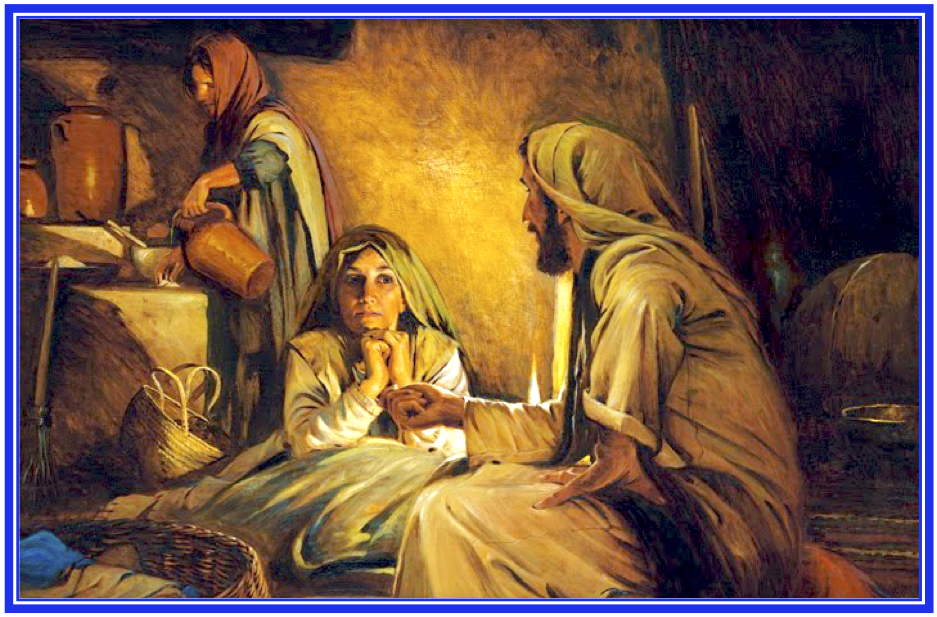
The Master Catalyst Manifest on Earth
Martin Cecil
August 12, 1980 Assembly
Never underestimate the power of spiritual
expression—we could say the catalytic action of that power. This brings
changes to pass without any change in the nature of what it was that brought
the change about. We remain ourselves. We remain genuine. In spite of the fact
that necessarily we have to play various roles, the catalyst is always present.
It may be that the catalyst which we really are will transform the role that we
are playing. We do not identify ourselves with external changes because we
have an awareness that we are individually and collectively the unchanging one.
An identity begins to be known that transcends every role that may be played.
Never again do we become lost in any of the roles which we play. People do this
all the time. We do many things, we play many roles, but we remain ourselves.
Here is something stable, something unmoving in a realm which is in the process
of being transformed.
In order to function in all the essential roles
that are needful we must have this stable base. We never think of ourselves as
being the role that we are playing. We may recognize the essential nature of
the role we are playing. We are in the world, but not of it. Being in the world
we have sundry roles to play. We don’t object to roles, even the humblest.
Who’s to judge as to which role is the most important? The human view will not
tell us. You may have found, to the extent that you have been a catalyst in any
situation, that those who are present in that situation became aware of the
change without knowing why it happened. They don't look at you and say, “Ah,
you're the catalyst.” We need to be humble in that sense so that we do not
project ourselves forward so as to make sure everybody knows how important we
are as a catalyst.
A catalyst is very often most effective when it
is unknown. Something becomes known to human beings and it will be
mistranslated. The Master was a catalyst. When He was on earth we see the
immense changes that occurred throughout the whole world because of the fact of
His presence. Those changes have been mistranstranslations, haven't they? The catalyst
was there, the transformations occurred, but they occurred on the basis of
human mistranslations. This partly was consequent on the fact that He was no
longer present. The responsibility was in the hands of those who had been with
Him. They didn't handle it too well.
If these essential transformations are to
provide a true translation there must be on hand a catalyst that remains, that
continues to be present, that continues to exert a control and dominion with
respect to the changes that are occurring. In order for this to be so, there
has been the necessity for a collective body. It would never happen on the
basis of one person. If it could have happened on that basis, it would have
long ago. The Master was here, and there
was no one who could have handled that in any more effective way than He did.
We are not looking for a repeat performance of some kind, maybe with some other
actor in the central role. But this role has to be played, the catalyst has to
be present, but it becomes an effective means of transformation, ultimately
transmutation, because it is a body of individual catalytic factors. And it’s
the whole body that is the catalyst in fact.
We have been concerned with the development of
this manifest catalyst on earth. We become familiar with the requirements
because we let it happen in our own individual experience. We ourselves
discover what it means to provide the catalytic influence in all our affairs.
This influence needs to be pure and absolute. We don't agree with what is not
right and fitting. Unfortunately this has happened all too much in our
experience. There has been agreement on the wrong basis, agreement with respect
to something that was distorted, usually to keep the peace. The catalyst
doesn't necessarily keep the peace. There is the sword aspect to the catalyst.
If there are those things that are not evidence
of the real nature of spirit in action, appearing through ourselves or through
somebody else, we would naturally anticipate rebuke. All too often, rather than rebuke, agreement has been provided. We tend to
provide agreement so that someone else doesn't rebuke us. “I won't rebuke you
if you don't rebuke me,” so that we can continue to get away with human nature.
But there is a line here to be drawn, isn't there? We are here to draw that
line. We need to be aware of what is necessary in order to allow this unified catalyst to operate on earth. Our sole concern is to provide what
is necessary so that it may.
We have recognized that this requires that we deal with many aspects of
human nature so that we may be firm and absolute in our approach to every
field. We cannot know ahead of time what field will be offered to us in which
we need to provide the catalyst. These things are not scheduled in the usual
human nature ways. So we need to have a broad view, a broad understanding,
which is capable of coming to point in a specific sense with respect to the
circumstances that arise.
What I have spoken of as the priesthood is the catalyst—the catalyst
that has to be purely itself; it cannot be altered from being itself. We have
taken note often of the evidence of this revealed by reason of the Master's
presence on earth. Nothing could happen to change Him from being Himself. So
with this collective catalyst. Obviously it requires an absolute loyalty within
the catalyst on the part of those who compose it. There is an absolute
acceptance of the truth in one's own expression—a consistent experience. If
anything creeps in through anyone that is not quite what it should be, then
immediately it is rebuked, maybe not because someone shakes a finger in someone
else's face, but by the very quality of
one's own living. There is a rebuke there. And a person who is not
permitting the truth to find expression will begin immediately to feel very
uncomfortable. Often not a word needs to be spoken. There are occasions when
silence is golden in this sense—no word is spoken. It gives the individual a
chance to think again. If it's too blatant, there may be a need to turn on
one's heel and walk away.
The catalyst provides a rebuke; this is part of the catalytic action by
which changes are wrought. There is a need for a clear association with the
word, with the tone of life, the tone of the catalyst. We examine the human
nature experience to some extent in order to make plain what the attitude of
spirit is relative to such situations. We are not interested in human nature
and the way it behaves, but we are interested in being very sure that we do not
inadvertently even associate ourselves with such off-key expression.
The priesthood has the responsibility for government and for education.
There can't be government until education has been sufficiently in the picture
to allow the ministers of government to be on hand. There must be the priesthood, in other words. This has
been a problem—to have the priesthood on hand who were capable of handling
what needed to be handled, because there needed first of all to be sufficient
education so that they might be on hand. And we see education in a little
different way too; because it's not a matter of information; it's a matter of
experience—of something coming forth into spiritual expression. But it relates
to every field of our living. It relates to all our associations together. If
we begin to accept our responsibilities in the priesthood, male and female,
then we have things to handle that we didn't have to handle before. Heretofore
the priesthood hasn't been around. There was no one handling the things that
the priesthood needed to handle. When the priesthood begins to put in an
appearance, then they are handling something that hadn't been handled before.
We have to have an encompassing vision which enables us to
be aware of what it is that needs to be handled. And we recognize that the
handling always comes very close to home, initially. Once we can handle what is
next to us the way it should be handled, we may be trusted with a magnification
of that further afield. If we can't do it with respect to what is next to us,
how would we ever expect to be trusted with anything more? Now, there have been
those who haven't necessarily proven trustworthiness in the little things, who
yet are always looking over the fence for some great thing which they are going
to do in real ministry. Well the real ministry is right next to one always. If
one hasn't seen it there one has only imagination with respect to a real
ministry somewhere else. It's not real at all.
So we handle what is right next to us. And it is in this that we prove out
the fact of the priesthood.
We may see various areas where there has been a great emptiness.
Government is impossible without the working of the law—to put it another way,
without sex. Therefore there is obviously a need for education in this field,
first of all, that there might be the priesthood—who would then provide what
was necessary in the expanding responsibilities of government and education. In
view of the fact there hasn't been a priesthood available for this creative
work, it might be said that all who aspired in that direction were yet
children. If we consider the true state, where there is a priesthood, where all
have reached a level of adequate maturity spiritually speaking, then the
children growing up in the ordinary sense would be correctly taken care of,
correctly educated, and move into greater spiritual maturity. But we didn't
have a situation like that and regardless of adult bodies, there were a lot of
children around. We are looking toward a greater spiritual maturity and a
priesthood capable of handling children in mature bodies.
There is rightly always the provision of dominion from an external
standpoint, which gradually diminishes—there must be a balance here—diminishes
to the extent that it is coming up within the person concerned. It comes up in
some sooner than others—and then there is a tendency to judge—but even in the true state there are those who begin to experience a greater
maturity more quickly than others, and there will be a different situation with
respect to each in this regard.
There is a warm enfoldment by the
priesthood, male and female, who are responsible for the field of education.
And the whole cycle of unfoldment is designed to allow the individual to
realize from within himself the dominion that should be expressed in his own
particular area of function. But that dominion includes every aspect and every
level. If there is no adequate education for every aspect and every level, that
individual can never experience spiritual maturity. We see something of the
responsibility of the priesthood in this regard.
I think you will recognize that there might indeed be a need for one
hundred and forty-four thousand to handle what needs to be handled just in it’s
core aspect. There is a vast field. Let us not get intimidated by the vastness
of the field. What we do is handle what is with us, that’s all. And if the
catalyst is there in fact, then everything will be taken care of. We are not
trying to take care of it in human strength, but letting the catalyst work. The
former things pass away; all things are made new in consequence.
Now there is something to be done in every
moment. Emphasis has been placed upon the now. We can only live now. However,
living now, there may be an awareness of what is coming. I think living now has
been interpreted in some consciousnesses as narrowing things down to a little
dot, so that we are really in a very small place. But “now” is a crossover
point. There is the future and there is the past. The future comes to point
now. It comes to point out of what might be described as a state of vastness.
The space contained within the two converging lines which are coming down to
this point from above is a symbol ultimately of infinity, isn’t it? You extend
those lines and they go on forever and the space becomes infinite. But it all—out
of the future—comes down to this point where we are on hand to usher it into
the world so that it may move into the past. The past equally goes out to
infinity too. Let us not think of now then as being merely a dot. It is the
crossover point where we stand, where we are responsible.
But the garden is planted eastward in Eden. It
is the garden, the essential essences of what should properly be brought to
focus in oneself now. One may be, and one should be, rightly aware of what it
is that is approaching in this sense. If you try and look too far, of course,
you can get lost in infinity, in which case you have stepped out of the now.
But if you stay in the now and from that vantage point begin to allow a
spiritual discernment to acquaint you with what it is that is coming, then you
are not leaving the now—that discernment is
part of the right action now and you are never therefore taken by surprise.
This is not a discernment, necessarily, of coming events. They haven't yet
taken form. This relates to spirit, the garden planted eastward in Eden. Part
of the action of the spirit of truth in our own experience is to acquaint us
with things to come.
Now people usually think of things to come in
terms of coming events. But we are not so much interested in that. We may see
such things because coming events cast their shadows before. There must be a
light there to cast a shadow and we are interested in the light which is
present because of the movement of spirit. Spirit is vast, unlimited, but it's
coming down to us individually; and also to us collectively, to be brought to
point where we are either individually or collectively. As it begins to come
toward this point it begins to be concentrated to a greater extent and becomes
more specifically discernable in consequence. Something needs to come out of that vast expanse, down here right where we are and it is close to our field of
specific responsibility, that we may begin to discern something of what is
coming, the spirit of truth showing us things to come.
Spirit—something emerging from certain
vibrational levels other than earthly levels. When our polarity is right we are
perceptive of these things, we are discerning of them; we know a little ahead
what it is that is happening. To the extent of our ability to discern in this
way we have the opportunity of allowing what is coming to be correlated with
what we know in our present moment of ministry. It's not as
though there was a set structured pattern of spirit coming down, and it's going
to come down here and it won't be any other way than what it is. That would be
the state of an automaton in so far as we were concerned, wouldn't it, if this
was really the case.
Our discernment broadens our view. According to the extent of our discernment it can be quite a view. To start
with it is probably very little. Within that range there are certain things
apparent—vibrations. And knowing what is present in our field of
ministry we may allow it—“this would seem to be fitting”—allow it to come out
that way. There is a vast provision available, treasure in
heaven, and it's not going to be forced on us in some particular way. We are
given the opportunity of playing our part in deciding what it is out of this
treasure which is fitting and right for our immediate field of ministry.
We don't do this as though what was coming to us
individually was unrelated to what was coming to others. We have a certain
discernment which relates to others too. We see what is emerging for them. They
are not yet in position to discern what it is that’s coming insofar as they
are concerned, what should be appearing next. But we should be in that position
so that we can discern what is appearing for them and we can begin to acquaint
them with what it is that is coming to point in them. This is part of the
responsibility of the priesthood. One needs to be able to discern what it is
that is needful vibrationally speaking. We have to discern that first before it
can take form correctly. We know these things because we have spiritual
discernment. We see what is coming down from God out of heaven before it
arrives, it’s in the offing. This is capable of being discerned because it's
not unrelated to what is happening in this present moment, to whatever has come
down from God out of heaven that is being expressed.
There is not a God sitting up there on high
saying, “Well now I have this particular treasure that you are going to take
whether you like it or not.” He said, “I have all these treasures. It's your
responsibility to discern which are the right ones to be made use of in the
present moment of your ministry.” And we have that responsibility; we have this
array of facilities available to us spiritually speaking. We also have an
awareness of what is present with us materially speaking. And we bring the two
together on the right basis. You look over your own array of spiritual
facilities and you see, well this perhaps is the one that would be most fitting
in this instance and you let it come through you to bless. This is the way we
minister.
This which is to be offered by the priesthood is
something new. It hasn't been known. Obviously everybody has something more to
learn by reason of actual experience. This emphasizes the importance that,
while gaining this experience, as whatever is required unfolds naturally, there
should always be very careful orientation upward. One should never assume that
one is going to gain experience all on one's own. This is the usual attitude of
human nature. “Ah, now I begin to see something. Now I am going to gain this
experience for myself.” No.
There must be dominion. There must be the
control provided, the enfoldment provided. This can only be done to the extent
that those who are to be enfolded are yielded and open upward, aware that they
don't really know yet, they haven't the experience yet. Therefore, “What is it
that's fitting?” There may be a beginning awareness of something or other, but
you let the control always be where it belongs. Presumably when there is
experience, when there have been a hundred years of such experience, we will
say, then those concerned possibly could be trusted to handle their affairs
rightly without the necessity of letting everything be laid out to the higher
point. Obviously this would become very tedious after a while, when we come to
the one hundred and forty-four thousand even. So there is a development of the
ability in spirit to remain rightly oriented without necessarily always having
to give it a form. But in the initial stages, where there isn't the experience,
it must be given form. It must be kept centered so that the experience may be
gained on the right basis. Always it comes back to this level of the keeping
of the first great commandment.
© Emissaries of Divine Light
from
The Great Lover
Uranda March 22, 1952
I think we
might well meditate upon the wonder of God's Love. Most essential in this
process is a vivid realization of the meaning of God's Love. The central core
of the Holy Spirit, the central core of the Spirit of the Living Christ, is
God's Love, or the Spirit of Love; and we remember that the first of the two
great Commandments emphasizes that we must love the LORD our GOD with all that
we are, not just a part, not just seventy-five percent of heart and mind and
strength, but with all that we are. So, over and over again, we need to
meditate upon the Reality of God's Love, so that there may be a deeper
realization, so that there may be a clearer vision, so that there may be an
enlarged understanding.
God is eternal, and it will take eternity for
us to know the fulness of God's Love. This being true, we cannot hope, in any
one moment, or in any one hour, or in any one year, to learn all there is to
know about God's Love. Yet, when we begin to meditate upon a subject which we
have considered before, there is a tendency in the human mind to translate what
is said into old patterns of belief, and we are reminded of the Master's Word,
that we should put the new wine of life into the new bottles, into the new patterns
of realization, into the new understanding of Spiritual things; for if we put
the new wine into old bottles, the bottles will burst and the wine will be
lost. The wine of life, as it appears in us in the depths of realization, must
be allowed to find a place in the new bottles of understanding.
Now, as we
meditate upon this familiar theme, let us not translate what is said into old
patterns of concept or belief. Let us so let go in love response to God that
through the very Spirit of the Word there may be a deeper realization than we
have ever known before; for no matter how much we may know about God's Love it
is not enough, and it certainly is not all that there is to be known. The
central core of the Spirit of God is Love. It is written: “God is Love.” The
more we know about Love, Divine Love, the more we will know about God; and the
more we know about God, the more completely are we fitted to let God's Love
have meaning in our lives, to let God's Spirit work through our minds, through
word and deed, through our hearts, through all that we are, with all of our
strength.
In
meditation upon God's Love, I would that we draw nearer to God's Heart of Love
than ever before, and to this end I should like to share with you a meditation
upon a text which I have read many times before, perhaps not in the presence of
some of you, but to me this text has exquisite beauty, to me it is the richest
poetry. And to my mind it conveys a depth of understanding, a breadth of vision
and an opportunity for meditation such as can be found in few places in sacred
literature. This text tells something of the way in which God's Love has been
wooing the wayward, hardened hearts of men and women down through the
centuries.
God is a Great
Lover. “God so loved the world that He gave His only begotten Son, that
whosoever believeth on Him...”—and the Master said, “He that believeth on me,
the works that I do shall he do also.” So if we do not do the works, if we do
not let His Spirit move us to the point where we can do the works, we do not
believe on Him, no matter what our lips may claim; for the Master said, “He
that believeth on me, the works that I do shall he do also.” So it is not the
claim of the lips; it is not the declaration of the individual. The proof rests
in whether or not we let the Father do the works and speak the words, whether
or not we let the Spirit of the Living God have meaning in our daily lives.
God is a Great
Lover. We look back through the period of recorded history, and we see that
over and over again He sent His prophets into the world to woo the wayward
hearts of human beings. Over and over again He sent those Words which should
have softened the hardness of human hearts. And, finally, our LORD and KING
Himself came on earth and did the works and spoke the Words and revealed Life
in a glorious expression of the Essence of Deity—something that surely should
have melted the hardened hearts, something that should have drawn the wayward,
so that there should be an eagerness in our movement toward the Kingdom. And
yet, in the world there are so few who are ready to move eagerly and with
enthusiasm toward that Divine Pattern which God has established for the
children of men. And even when they are the Responding Ones who let themselves
be drawn as far as you have, so that you have come to this time and place,
there is sometimes a lack of eagerness, sometimes a lethargy, sometimes a
lukewarmness toward God, the Great Lover.
If we would
know God's Love we must yield to His wooing, and if we say He has not wooed us
tenderly, persistently and everlastingly, then we surely lie and the Truth is
not in us; for constantly that wooing Love has been sent forth to all of us and
to every man, woman and child on the face of the earth, regardless of race or
color or creed. The Great Lover is wooing you tonight. He has been, through the
years that have gone. And can you say that your response is such as to satisfy
His Love? Have you so yielded to His Love that He knows He is in you, that you
are one who abides in His Love and lets His Love abide in you? The LORD of Love
said: “Abide in me, and I in you.” Until we abide in His Love and let His Love
abide in us, we cannot know oneness with Him, and until there is that oneness
we are not ready to do our part toward letting His Kingdom come on earth.
The Great Lover
No matter
how many times He has been rebuffed, no matter how many times His Love has been
scorned, no matter how many times human beings have, in self-pride, turned
their backs on Him, He loves us still, and that Love so overflowing must
finally one day overwhelm us and take us to itself. If we are to be
His in the true and final sense, that Love must draw us into oneness with
Himself, that we may abide and go no more out, that we may be so centered in
Him that the Light of His Love shall shine through our eyes, the Spirit of His
Love shall appear in our lives, in all of our attitudes and all that we do.
In this
poetry which I would read to you there is a beautiful portrayal of God's
attitude, the attitude of the Great Lover, and the words are spoken to you
tonight. They are not merely words that were recorded some thousands of years
ago, to be thought of as a part of a dim and distant past. They are words of
beauty, because they are words of Truth. They are words of penetrating meaning,
because they are words of Love, and as we yield to Love and let the beauty of
Truth have meaning in shaping the patterns of our lives, we find that we begin
to Live, that we are lifted up out of the realm of mere existence and brought
into the land of the Living, where there is a victory over all the limitations
which beset human beings. I thank God for the privilege of sharing with you
such Love, such an opportunity of response to the Great Lover of humanity. We
turn to the Song of Solomon, second
chapter, beginning with the eighth verse, and this is our recognition, to begin
with, our acknowledgment, our vision, of the great Lover:
“The voice
of my beloved! behold, he cometh leaping upon the mountains, skipping upon the
hills.”
“The voice
of my beloved!” Before one can reach forth one's hand to touch the Beloved, one
can hear the sound of the Voice that thrills, and if there is a depth of Love
there is a thrill in the sound of the Voice of the Beloved, and if we love God
there is a thrill in the realization that His Word is to us in this hour.
“The voice
of my beloved! behold, he cometh leaping upon the mountains, skipping upon the
hills.”
What is
God's attitude toward the obstacles? Do the mountains hem Him in, and are the
hills as barriers? The things of God cannot be contained by the mountains of
difficulty and the hills of adversity.
“The voice
of my beloved!” And how does God come? How does the Spirit of God come? As
something which makes man feel subjection to the worms of the dust? Oh no! How
does God come? In the current of victory, in the spirit of vibrancy, in the
revelation of power that is beyond the fondest imaginings of man—He cometh. The Master said that there
would be those who would say, “My Lord delayeth His coming, and so we can go
out and do as we please. We can follow our own fancies.” The voice of
disbelief, the voice of the self-active, says, “My Lord delayeth His coming.”
But the voice of those who love God, and who recognize the Voice of the
Beloved, acknowledges, “Behold, He cometh.” We have the opportunity of
receiving Him in this hour. We have the opportunity of knowing that the Great
Lover is coming to us as we yield in heart and mind and body and soul. “Behold,
He cometh.” And how does He come? “Leaping upon the mountains, skipping upon
the hills.”

“My beloved
is like a roe or a young hart.” Sometimes when we take a walk in this part of
the country we come upon a little herd of deer, and if you have ever seen a
deer, a roe or a young hart, in natural habitat, eating in the meadow or having
caught a whiff of some scent, heads erect, alert and standing like statues,
what impressed you most? There was the vibrancy of life, gracefulness, beauty
of form, and something indefinable, something—shall we use the word “wild”? Not
in the sense of the wild tempest, but something which knows the freedom of the
wilds, something which is not bound, something that spells freedom in the
deeper sense, and alertness, and vibrancy. Yes, you come unexpectantly upon the
deer in his natural habitat, and there is something of indescribable beauty. “My
beloved is like a roe or a young hart.” The roe and the hart are of the deer
family. And so, that vibrancy and strength are there. And when the deer begins
to move—while standing still there was the graceful poise, but moving,
light-footed and fleet, leaping over barriers, going like the wind! To me, that
one sentence says so much: “My beloved is like a roe or a young hart.” And when
we pause to consider all of the characteristics revealed we see something of
God, something of that which should be in us, something that is in us as we
allow the patterns to unfold and the Spirit of God an opportunity to express
according to God's Will for us.
“My beloved
is like a roe or a young hart: behold, he standeth behind our wall.” What a world
of meaning in that clause, “He standeth behind our wall.” The Master said, “The
Father who dwelleth in me, He doeth the works.” The human being has erected a
wall, his front, the wall which is so slow to yield to the Divine Pattern. “He
standeth behind our wall,” behind that barrier, behind the wall of human
resistance, human self-activity. He is there waiting behind the wall, and, in
this connection, we are reminded of something else the Master said: “Behold, I
stand at the door and knock: if any man hear my voice, and open the door, I
will come in to him, and will sup with him,” and share the expression of life
with him. The same pattern, the same truth, is revealed here in this bit of
poetry: “Behold, he standeth behind our wall.” “Behold, I stand at the door and
knock: if any man (anywhere, of any color or creed) hear my voice, and open the
door, I will come in to him, and will sup with him,” and share the expression
of life with him.
And so we
let that barrier down, we let the wall cease to separate us from the Great
Lover, the wall which the human being self-actively thinks must be up there if
the individual is to be meaningful. The human being thinks the human
personality is in jeopardy, but if we will let that wall crumble, let the door
open, the Divine Personality will begin to appear. We need not be concerned
about what will pass away when we yield to the Great Lover, for we are better
off without that which then passes away. Whatever falls away, whatever disappears
with the coming of the Great Lover, let it go. We do not need it.
“Behold, he
standeth behind our wall, he looketh forth at the windows.” What are the
windows? The windows of your eyes. Again it is saying, “The Father who dwelleth
in me, he doeth the works.” And when we yield to the Great Lover, what happens?
When you meet someone who is in love, in this outer world, is there a love
light in the eyes? If there be no love light, there is no love. “He looketh
forth at the windows, showing himself through the lattice.” The human being
feels that he must maintain that latticework. Instead of letting the Great
Lover show Himself through all that we are and all that we do, there is the
tendency to keep up the lattice, to let Him show Himself just a little through
the lattice. “If we were to let that latticework which we have built with such
effort be torn down, there would be nothing left,” the human being says. If,
then, there is nothing left, it is better so; for if, then, there is nothing
left, there is nothing in any case. Let us let the lattice of human,
self-active patterns be torn down, so that the Beloved may show Himself fully,
and be revealed in the expression of our lives.
 “The voice
of my beloved! behold, he cometh leaping upon the mountains, skipping upon the
hills.
“My beloved
is like a roe or a young hart: behold, he standeth behind our wall, he looketh
forth at the windows, showing himself through the lattice.
“My beloved
spake, and said unto me, Rise up, my love, my fair one, and come away.”
And that is
the word for each one. It is the word for you. “Rise up, my love, my fair one,
and come away.” Away from what? Away geographically? Not necessarily. Sometimes
it does mean a geographical change. But that is not the point. Come away from
the old patterns of life, let go of the old limitations, the old fears. Come
away out of the old sphere of existence and arise, arise up into the new
pattern of life. Let yourself be adopted, let yourself be reborn, let yourself
share in the Resurrection. “Rise up, my love.” That is the Word of the Beloved.
So often human beings seem to think that the Word of God and the Will of God is
that they should be crushed down under some heavy burden, and that the
difficulties should increase. There may be mountains and hills, but as we yield
to the pattern of the Beloved—what does it say of Him?—“Behold, he cometh
leaping upon the mountains, skipping upon the hills,” and if we are to come
away with Him we will be doing that with Him. The lethargy of human beings!
They think that if they are going to walk with God they must confine God to the
same dull patterns which they have built for themselves, that they must confine
God to the same realm of limitations and imprison Him on earth. But the coming
of the things of God down out of Heaven into the earth does not mean that God
should be imprisoned, but that man should be set free, free to share the
glorious liberty of the Children of God.
The Great
Lover—wooing with all the yearning of His great Heart of Love, has been
calling to His children down through the ages; and so few have listened, so few
have yielded. Human beings have so many things to do, so many things that are
so important that they just do not have time to listen to the Voice of the
Beloved, or to yield to the yearning, wooing current of His Love. And yet, if
we are to know what it means to share with Him the privilege of leaping upon
the mountains and skipping upon the hills, we must come to the recognition that
we cannot do such things in human strength, of ourselves. It is only as we
yield to that Invitation that this can be accomplished. “My beloved spake, and
said unto me, Rise up, my love, my fair one, and come away”—away from the old
patterns. “Rise up and leap upon the mountains with me. Come with me skipping
upon the hills. Let the vibrancy of life fill you. Let new meaning penetrate.
Let the hardness melt away. Let my Love overwhelm. Yield to my wooing and I
shall make you one with me, that you may share that which I AM, right here
where we are.”
When two
human beings are in love, in any true sense, is there any lethargy in their
attitude one toward another? Suppose the loved one has been away for a time and
is nearing, what is going to be the attitude? “Oh, let him or her wait. What is
the difference? I will go over here and take care of that. I have this to do
and I have that to do. Let him wait. It does not make any difference.” Is that
the voice of love? No. Even in a human sense, everything is dropped, unless
some life depends upon it, and there is interest in seeing, in meeting, the
beloved.
So, our
attitude toward God must be that of yielding to His wooing, that in heart and
mind we may be overwhelmed by His Love, that all hardness may melt away and
that, caught up in His arms of Love, we may let His Love find expression
through us into the world; and only then can we love our neighbor as ourselves.
How do we love ourselves then? There is a selflessness, a state of being
yielded to God's Love, and when we truly love God we are not concerned about
loving ourselves. We are concerned about loving God and letting His Love
express through us. Then, in the human sense, we are not concerned about loving
our neighbor to fulfil that Second Commandment. We are concerned about letting
God's Love express through ourselves to our neighbor, that even as we have let
God's Love express through ourselves, we may let His Love reach someone else.
And so do we begin to fulfil the second of the two great Commandments.
“My beloved
spake, and said unto me, Rise up, my love, my fair one, and come away”—away
from the ills of the old life—and live in the Spirit of the Living Christ,
share the Victory. “The flowers appear on the earth.” When the Spirit of God's
Love appears in one's life, lovely things begin to take form. “The time of the
singing of birds is come, and the voice of the turtle is heard in our land.”
Why? “For, lo, the winter is past, the rain is over and gone.” The winter of
the coldness of man's heart, the winter of refusing to yield to the warmth of God's
Love. “The fig tree putteth forth her green figs, and the vines with the tender
grape give a good smell.” To my mind, that is a glorious line. In the
springtime, when the earth is bursting forth into resurrection, there is
something so Divine in the earthiness of growing things, something Divine made
manifest in this realm of form. “And the vines with the tender grape give a
good smell.” That is earthy, the things of God made manifest on earth in the
realm in which we live. “Arise, my love, my fair one, and come away.”

And so, the
Voice of the Great Lover has been sounding down through the centuries and is
sounding now for you, and as we yield to the LORD of Love and let that Love
hold us centered and true while the patterns of His Truth begin to shape and
mold our lives, it will not take so long for that beauty to appear. If human
hardness of heart postpones the coming of the spring, we cannot blame God. The
Great Lover's wooing is not at fault. So let us yield, let go to Him and let
His Love enfold us and fill us, that abiding in His Love, centered, faithful
and true, we may let the patterns change from the coldness and the chilliness
of winter that is past, that the beauty of the flowers may appear, the beauty
of the New Earth state, the vibrancy of life, the Resurrection and the Life,
all because we yield to the Wonder and the Glory of God's Love, for this is the
Invitation of the Spirit of the Living Christ: “Come unto me, all ye that
labour and are heavy laden, and I will give you rest. Take my yoke upon you,
and learn of me; for my yoke is easy, and my burden is light.” Learn of me, not just about me. Yield the
load, let go and respond to the Invitation of the Great Lover, the LORD of
Love; for as we are centered in Him, all else shall take form according to the
patterns of His Everlasting Truth, that we may share the Victory of the Living
Christ, and LIVE.
Peace be
unto you, in the Name of the Prince
of Peace, as you remember to be obedient to His Command
Abide in me, and I in you
© Emissaries of Divine Light