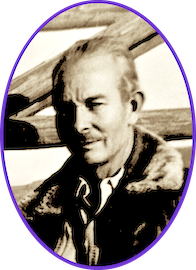
The Use Of Material Objects To Focalize Vibrations
YouTube Audio
Uranda January 5, 1954
One of the things we have to do this evening is the carrying out of the patterns suggested the other evening with respect to the use of material objects, which in and of themselves have no power, as a means of bringing vibrational factors to focus. I notice that in harmony with the word I sent to you, many of you have brought pictures this evening which you wish to use, from the standpoint of focalization of attunement currents in your own rooms or quarters. You will notice that I have brought the little statue which I mentioned to you before.
This little statue in and of itself has no power. A wrong pattern of expression or attitude with respect to these things could develop the concept that we are somehow utilizing what could be called idolatry. In other words if there is an understanding of what we are doing there is no danger of any such false concept developing. But in utilizing these principles, I wish to emphasize the fact that it is very important that you be very careful what you may say or how you may say it to others. Now I am not suggesting that we somehow try to hide the application of this principle. At the appropriate times and seasons you may utilize it regardless of who may be there. But it needs to be very, very clear in our consciousness, individually and collectively, that we are not accepting some image as being “the thing,” but rather recognizing that an image in the sense of a picture or in the sense of a statue—the principle is identically the same in either case—may be looked upon as a point of focalization of vibratory factors in representation. The image, the statue, has no power in and of itself. It is not able to do anything, but we can do something with it. It cannot do anything, but we can do something with it—a visual recognition of that which represents.
When our Master was on earth in the body of Jesus, the man, that body represented the Father, in the representation of the God Being whom we speak of as our LORD and KING. His physical flesh body was in oneness with the spirit of the God Being, and yet, even in that oneness, was representative of that God Being.
Anything that is to be made manifest on earth must, by some means in the realm of form, be a representation of that which is in heaven. That which is in heaven cannot project itself as it is into the earth, in the sense of the vibratory level in which we function. That which is of heaven must come into the earth through some form which represents that which is in heaven, or in the realms invisible to the human eye.
Man, as such, cannot see spirit, as such; and yet spirit is made manifest through man. As I emphasize this point, that the image, whether in the form of a picture or a statue, cannot do anything, but that we can do something with such an image, we might remember the statement as given in the Ten Commandments: Thou shalt not make unto thyself any graven image or likeness of that which is in heaven above or in the earth beneath. Now it might appear to some, who have not stopped to consider the matter, that I am suggesting something which violates that Commandment. But let us take another look at it. We find the record in Exodus Twenty. First, “Thou shalt have no other gods before me.” That is clear, a point upon which we have given meditation many times.
“Thou shalt not make unto thee any graven image, or any likeness of any thing that is in heaven above, or that is in the earth beneath, or that is in the water under the earth: Thou shalt not bow down thyself to them, nor serve them: for I the Lord thy God am a jealous God, visiting the iniquity of the fathers upon the children unto the third and fourth generation of them that hate me; And shewing mercy unto thousands of them that love me, and keep my commandments.”
“Thou shalt not make unto thee any graven image, or any likeness… Thou shalt not bow down thyself to them, nor serve them.” This expression appeared at a time and a place where images as such were worshipped as God. In other words “Thou shalt not make a god unto thyself. Thou shalt not make anything which thou shalt consider to be a god, which thou shalt undertake to serve.” Now we all know that we are not in any sense bowing down to an image, to serve the image, whether in the sense of the picture or the statue. We have not made these unto ourselves. They are made unto God. We are not in any sense detracting from, or separating from, God, but in the field of representation they are accepted as a point of unified focalization in response to God—not to the image. If your response to me is limited to me as a man it would be wrong. But your response to me is in recognition of that which I represent, something brought to focus, to me, and through me, to God.
“Thou shalt not make unto thee any graven image.” The commandment does not say “Thou shalt not make unto Me any image which may be used as a means of recognizing the focalization of My Spirit.” As we bow down before God and serve Him, remembering “Thou shalt have no other gods before me,” there is no reason why we cannot use this Principle of Representation, which has been in use down through all recorded time. It was in use before that. It is something which the Master used; it is something which we see was in actual fact in the Master's own manifestation—that which represents. There may have been times when, with that fact in mind, one might prefer a flesh-and-blood point of focalization. We recognize that we can utilize persons as the means of focalization in the vibratory field in love response to God, but we need to recognize that it is possible for us to use material objects, lifeless and helpless in and of themselves—for us to use them; not for us to serve them, but for us to use them in the service of God. Herein we see the vast difference between the right pattern of function and the wrong. I wish to make it very clear, so that there could not be any possibility of misunderstanding.
Now let it be recognized that the value of any such object depends upon the individual who uses it. If you are undertaking to serve the object you are wrong, but if you are using the object it can be done correctly. The value to be derived from such a process depends upon the individual who uses the object, not upon the object itself. We might presumably use almost any object which to our minds, our senses, might be deemed fitting. If it violated our sense of the likeness of things, the value of the object would of course be lost; but any object which might be deemed fitting. In the days of the apostles, and in the days of the Master Himself, objects were so used.
The woman who had an issue of blood for twelve years used an object on that basis—the Master's garment. She said to herself, “If I touch the hem of His garment I will be made whole.” And when she did touch His garment on that basis, on the basis of her right use of such an object, the Master felt the virtue issue forth from Himself into the one who received on the basis of such response. Later, pieces of cloth were so used, and other objects, but the tendency was, among those who did not have full comprehension, to attribute power to the object and therefore to have a certain amount of response to the object, to become subject to it. If you are going to attribute power to the object as such, then it is wrong. But instead of serving an object, we are using an object. So whether, as in the days of the apostles, when they used what we call a handkerchief, which was blessed to act as the point of focalization in the vibratory field, or whether it was something else, is of small consequence.
Now these objects which we have brought before the Throne of God tonight are to be blessed, not in the assumption that they are thereby to have some strange and mystic power so that you can respond to the object as such and have some kind of blessing, but that they shall be recognized as objects of focalization in the vibratory field, through which there may be a conscious contact with that which is invisible, with that which is represented. This object of representation here in this particular case—whether it is the Master's picture or the statue representing Him, or the picture representing myself—is of small consequence, because you recognize that the two patterns cannot be segregated in any case, and that whatever is used, whether it is my body, my physical presence in the form of a man, or some object, it is all in representation of our LORD and KING, that we may have on earth that which represents heaven.
We cannot have heaven, in the sense of the invisible realm, manifest on earth any more than it is except by means of that which represents heaven. When we have discord and turmoil and chaos we have that which represents hell. On earth we are functioning constantly with those things which represent something, and any object which represents that which is of heaven becomes a means by which the things of heaven are made manifest on earth. This is something which you need to realize more deeply in relationship to yourselves.
You as human beings are supposed to represent something in heaven, so that the factors, the qualities, the realities, of heaven may be revealed on earth through adequate and proper representation. Our whole program is designed to establish on earth an adequate representation on earth of that which is in heaven. If we present on earth that which reveals heaven, then we have on earth that which represents heaven.
Remember, with respect to these objects, you are using them as a means by which your faculties of perception—sight, feeling, smelling, hearing, taste if you wish to include it, all your senses of perception—are brought to a point in love response to God. The degree of response, the nature of response, brought to point in a specific object, or the sense of perception which is focalized in such an object, determines the extent to which the cycle may work in the particularized field involved; not in the sense of responding to the object as an object, but recognizing the object as a point accepted by many, through which response is extended to God. If you think you are to respond to the object you are wrong. If you are to respond to God through the object you are right. And by use of an object we can bring the pattern of response in many people to a single point, so that as the pattern of response is concentrated to point the current from God to those who so respond can be increased in power and in meaning.
One of the great illustrations in history with respect to the working of this particular process was the Ark of the Covenant. The Ark of the Covenant was a box covered with gold, having some handles, a plate on the top of it, and two images—an image on each end, of an angel. This box, this object, had absolutely no power in and of itself, but as the central object of focalization of the vibratory pattern of the people, the children of Israel, there was a tremendous current allowed to work through it. And it was so designed that the patterns involved could work effectively. The Ark as such, when it was first made, had no power. As an object it never had any power, but as an object it was the Central Point of Focalization for the entire people of the children of Israel. With their response so centered the current of God's power working through that object to them was greatly increased.
Now there are many patterns which might be used, and which perhaps in the future may be used, to some degree at least; but we are starting, opening a cycle, in the simple recognition of these factors, and the acceptance of an object as a means by which your focalized response to Me and to our LORD may be established here, regardless of where I may be in person geographically speaking.
I wish to draw your attention to this object which I present before you here. You may say it is a human concept with respect to the appearance of our Master when He was on earth, but I do not think that we need to be concerned about whether He really looked just like that, whether His facial features were just so. We may perhaps examine it closely. I would not be happy to find that you had been coming up here and picking it up and handling it and looking at it. If you do you will spoil the pattern. It is not to be picked up and handled by just anyone. I would ask Lorraine to take care of it, if it needs to be moved, or if she is not present to do so, Grace or Lillian may do so. But it is not an object to be picked up and handled. If you start handling it you are going to begin to establish your vibrational pattern in the material object itself, and that will not help matters any. It will not let you gain anything from it: a piece of bronze, with ivory hands and face, representing the form of our Master, representing His spirit of givingness, His spirit of compassion, His spirit of love, His spirit of blessing—representing Him. I wonder, would you like to accept a point of focalization in this image and receive an attunement now?
This object, this material object, becomes a sacred, holy object to the degree that we recognize the sacred and holy nature of that which this object may properly represent to our consciousness. We can, as you consider the matter, see here a representation of the Master, of the LORD of Lords and KING of Kings. We may say the head represents our KING. We may properly say that the right hand represents Me, and we may say that the left hand represents the Lord of Life. And we may say that the body of the statue, down to its base, represents every earnest, sincere responding one the world around, including you; for you are a part of the Body of God on earth; and the Body of God is a body of flesh. So this is not the Body of God—for you are a part of the Body of God—but this represents that of which you are a part.
Therefore I bless this sacred object in the Name of the Father and the Son and the Holy Spirit, that all who will respond to our LORD and KING, by a centering of attention to this object, may thenceforth and always receive, according to response, the current of Love and Truth and Life, in the filling of every empty vessel, according to the working of the Will of God on earth, in the current of the Spirit of our KING, in recognition before Him that Thine is the Kingdom and the Power and the Glory forever. Aum-en.
And so here, in the Shekinah of our KING, the evidence of the Presence of the One Who Dwells, we behold an object wherein we may let our attention center in love response to Him, to His Glory and to the blessing of the children of men. And so it is that we use this object, this sacred object, in the service of our God as we respond to Him, worship and serve Him, now and always. So let it be. Aum-en.
And now I shall be seated and you will please let the attunement pattern continue, as you are doing, for a time.
The value of this inanimate object, this holy object, to you here and now, at this level of your progress and development, is very great. You need something to help you center on a unified pattern, to a Central Being as it were, so that the vibrational patterns may no longer be scattered. And because we have a material object before you there is no need for you to have some personal attitude toward the object as such, other than appreciation for that which it permits us to do. With a person, even with me, your response is tinged and changed by reason of your attitude toward me as a person. You can be impersonal in this sense toward this sacred object. There is no reason for you to resent this object. It has done nothing, it has said nothing; therefore why should you resent it? Let your response be to our LORD and KING, for this object represents Him, as surely as it represents His representative.
Now, continuing in the pattern of attunement, so that there is another step in that which you are now sharing, will you please pick up the picture which you brought and hold it with your two hands, facing me. The objects which you hold in and of themselves have no power at all, but you have brought them to be blest, that they may be objects focalizing the spirit of your response to God and focalizing your reception of the spirit of God into the realm of form, particularly in the sense of attunement.
The Master said, “Lo, I am with you alway, even unto the end of the world” of evil. He did not say, “You are to try to project your spirit to be with me where I am, no matter where you may be.” He said, “Lo, My Spirit is with you, and by reason of My Spirit I am with you always, even unto the end of the world of evil.” So I say unto you, by reason of My Spirit I am with you here on Sunrise Ranch, even though I in person may be far away. Some of you have tended in times past to try to project your spirit to me, and you have found me pretty far away. But if you will remember that you do not have to project your spirit to me, but that My Spirit is here, then you will know that I am near unto you. Lo, I am with you here, through all the days of your service in this place. And if at any time you need to be reminded that by reason of My Spirit I am with you wherever you are, you may look upon this sacred object which I have set before you, or upon the sacred object which you hold in your hand, that you may be reminded that it is not needful for you to try in some strange fashion to come unto me.
It is rather that you should realize that I am with you where you are. As you begin to realize that I am with you here, or where you are, it will be much easier for you to realize and know that you do not need to try to go to where you think our KING to be, but that by reason of His Spirit He is with you here. And by reason of the sacred object of representation, you can center your attention here in love response to Him, that you may receive of His Spirit in this place. And as you receive of His Spirit you shall receive of My Spirit; and as you receive of My Spirit, so shall you receive of His Spirit. So let it be, now and always.
I have blessed these objects, these material objects, these sacred objects, in the Name of the Father, in the Name of the Son and in the Name of the Holy Spirit, that they may be sacred unto you, and that you may use them to the Glory of God and to the blessing of the children of men. So shall you do your part toward revealing on earth the fact that the Kingdom and the Power and the Glory belong to our KING; and because they belong to Him He has the right to grant you the privilege of sharing in the Kingdom and the Power and the Glory forever. Aum-en.
Let your voices be lifted in praise to God in the “Doxology”
So is the cycle established unto you, that according to your use of the opportunity that is granted unto you in the Holy Name of our LORD and KING it may in season be extended unto others, that all who will may share in the working of heaven on earth. Thy Kingdom come, Thy Will be done in earth as it is in heaven. Therefore serve ye in the Secret Place, in quietness, in stillness and in assurance, that this which is established unto you may be so, truly a representation of that which is of heaven, that it may increase and in season enfold the whole earth, to the Glory of God and the blessing of the children of men, in the Christ. Aum-en.
In the days before us, if any shall call upon you for assistance, to receive healing power or the need of blessing in any form whatsoever, in spirit grasp their hands in yours and lift their hands before the Throne of God, just as your hands are lifted in receiving attunements here. Let the objects you have been holding be placed upon your laps now, and lift your hands once more. In your hands lift the hands of someone whose response you feel, someone whom you would bring before the Throne of our KING. Do not try to radiate to someone—take the hands of those who respond and lift them, sharing with them your response to our LORD and KING. So shall you be blessed.
According to thy response, so be it unto thee, now and in all the days to come. Let thy response be such as to Glorify our LORD and KING and to increase on earth the recognition of His Kingdom and His Power and His Glory. Let the Shekinah of His Presence be made evident in your body, your mind and heart, in thought and word and attitude and deed, now and forever, in the Christ. Aum-en. Father, I thank Thee that it is so, in Thy Shekinah, in Thy Christ. Aum-en.
Let light increase. It always is a matter of letting it be so. No struggle, no human effort. The increase of light permits the increase of vision. There certainly is need for that increase of vision. Without vision, the people perish. But the increase of light is the increase of creative power by which essential changes are wrought, so that all might be included in the creative processes of restoration. Individually we have the ability to let the light shine and increase in its shining because responsibility is taken for one’s world.
It might be useful to consider something in this connection which relates to the dissolution of the veil of human nature, so that the light might increase. This morning we were considering again the matter of judgment. We may be inclined to think of this in terms of our association with other people and circumstances. I trust we do think of it that way and are exercised in the matter of relinquishing judgment, one of another and of our circumstances. This is essential if the light is to shine. When we speak of these things, the elementary ABC (Accusation, Blame, Criticism), it means little until it becomes specific in our living experience. We are all experts, I’m sure, in describing what is necessary. We can all talk at length about it. But here is the road to failure unless we specifically see the fact of our own specific judgments in daily experience.
So there is much to be looked at, which is brought to us moment by moment — we don’t have to go searching for it — because anything that is brought to you will, according to old habits, be judged. But anything that comes, whatever it may be — and it will come in specific ways day by day — is there to determine as to whether one still is in the kindergarten capacity, learning ABC. Presumably when we learn that, we can go on to higher learning. But if we don’t know our ABCs we’re stuck in kindergarten, and I’m sure no one is anxious to spend the rest of their days in kindergarten. No wonder things seem so dull and routine-like, if one has never gotten out of kindergarten. Of course to a young child first going in, that’s very exciting. And, I'm sure, entering into the experience of life on earth seemed, back along the way, to be a very exciting thing. But then somehow or other we got sidetracked, never having learned our ABCs. So the excitement tends to pall, and we have to hype it up somehow. At least this is the usual human view. As I mentioned this morning, there are matters of danger that excite people. They do all sorts of crazy things because it’s dangerous and they get a thrill out of it — that is, if they survive! That’s a very unnatural state of affairs and gives no indication of the true fulfilment that may be known once judgment is left behind.
As human beings we all fell pretty low. Many people talk about the fall. And it’s a fact. We got down into the muck and the mire where we don’t belong. We find ourselves somewhat stuck in the muck and the mire, wondering how to get out of it. This is a common experience to many people. They would like to shake it off somehow but cannot do so because of their own attitudes of judgment; that keeps them at the level where they don’t belong. What was it that brought people to that level? The eating of the fruit of the tree of the knowledge of good and evil, the tree of judgment. This is done in very specific ways; and we have to meet those specific ways and let them clear, so that when something comes to us and the habit of judgment arises we are there consciously to deal with this event. It may be a jerky experience to start with. We have to stop and say, “No, I shouldn’t be judging here. It doesn’t matter how justified I am in the reasons for this judgment, it is the judgment itself that keeps me embedded in this fallen condition.” Why should one try to justify oneself for staying in the fallen condition? That seems rather foolish. Well every time one justifies one’s judgments one is doing that, taking another lease on the fallen condition and staying where one doesn’t belong. There are many implications to this. We necessarily think of it in terms of our daily experience. But there are many background factors that are present with us that also hold us from coming clear so that we may rise above this human condition.
I was thinking a little about our use of the Bible, and particularly of that portion of the Bible which purportedly describes to us the Master’s presence and experience on earth. We have something here which has come alive for us so that it is no longer merely a story in a book. It has come alive to a certain degree.
Christians talk about Jesus Christ. We may speak of our KING. When it comes right down to it, what’s the difference? There is a character described here in the Gospels. This is a story. No one really knows where it came from. There has been a certain amount of effort to find what might be referred to as the historical Jesus, rather than the Jesus of the Gospels. I think it is fairly safe to say that no one has been very successful in this. Many ideas have been put forward as to the nature of the Jesus of the Gospels. Where did this character come from? Was it a real character? If you’re trying to make it so by looking at the form of things you will come up with an image. And human beings, obviously, have come up with an image. I’m thinking of this particularly in the Christian world; and I suppose most of us have had some sort of a background of Christianity, certainly from the standpoint of heredity in many ways, of generations and generations of people who read this story in the Bible and assumed that it was true and that it had reference to some certain particular character. However, as I say, when you start looking for that character, historically speaking, you don’t find him.
There are those who have postulated the idea that the Jesus of the Gospels was invented out of the characters of certain historical personages, maybe a couple of them or more. Well, someone was quite bright, evidently, if this was done. Of course it is true that the Jesus of the Gospels largely supports the building of the Christian religion. So presumably the things that are there were there because they did support this human effort. More recently of course there have been what are called the Dead Sea Scrolls, which have described another character. No doubt there has been a suppression back along the way of certain aspects of what it was that appeared on earth, in order to make possible the building of the doctrine of Christianity. This is not exceptional, mind you. You can look into this from the standpoint of other religions too.
But all I am saying here is that, insofar as we are concerned, we have seen Jesus very largely through the eyes of the Gospels. However we have also seen something which went beyond that, because there has been some sort of a living experience, something that we have had in our own experience which transcends the form. We don’t need the form, really, to tell us what the experience is. It’s something that springs forth into expression in our living if we will let it, let the light shine. The idea has been, for the most part, in the Christian world at least, “Look at the light.” The light was Jesus, Jesus of the Gospels. The statement has been made a number of times that all history is fiction. Are we to exclude this?
We have all, I’m sure, established images in consciousness relative to Jesus. There are those who not only established them in consciousness but let them come out in the form of wood or stone or the painting of a picture, whatever. Is there anything much different between having an image only in consciousness and letting that image externalize itself in some artistic expression? You have to have the image in consciousness first; and I think virtually everyone has had the image in consciousness, an image which was largely based in the story of the Gospels. “Thou shalt not make unto thee any graven image.” Oh, well we didn’t get around to doing it in stone, or in wood, or painting a picture. Actually some have painted pictures of the image they had in consciousness. But everybody had the image in consciousness, in whatever measure and whatever it seemed to be. I am suggesting that this must be relinquished. It must dissolve.
We find ourselves in a situation somewhat like what was spoken of in this story when Mary Magdalene was in the garden — again according to the Gospel — and couldn’t find the body of Jesus. There was someone there whom she questioned: “They have taken away my Lord, and I know not where they have laid him.” I would suggest that everybody needs to come to that point. Here is an image which people cling to; it’s very precious to them. We have stories in the Old Testament about people who had very precious images. One lady sat on them in her tent. But one cannot experience the truth if one clings to an image, even the image of Jesus. How then can the truth be known? Well we are aware of the way. But fundamentally it is taking the same position in one’s own world as Jesus was purported to have done in His. That’s the only way you could find out what the truth is. There are those perhaps who have tried in various ways to get back two thousand years to the events of that day, but no one was very successful — this, in order to find out what it was that really happened. We don’t need to go back there because all that is real is here now. The truth can be known now.
An aspect of judgment is this business of setting up an image. Thou shalt not make unto thee any image or a likeness of anything, even in the heaven above, certainly not in the earth beneath, though everybody has done that. Everybody has worshipped their external idols and been largely governed by what is present in the water under the earth, in other words the subconscious elements that come out of the past through heredity and in various ways. But there has been a deliberate setting up of an image of Jesus Christ in the Christian world, and other images in various ways in other religious doctrines. The view is: “There is the light” — the image is the light. One may feel rather self-righteous by reason of the fact that one may not have externalized one’s image, but you still have it. If you are an artist perhaps you could externalize it. And there are people of course who seek to externalize it in their living. This would require a very, very good person, if we are considering the Jesus of the Gospels. A lot of people don’t like that idea too much because they think it might end in crucifixion anyway. It isn’t a matter of trying to imitate Jesus according to one’s image of Him. Immense numbers of people have endeavored to do this, to make a facsimile of Jesus. What blasphemy!
The only way to discover what the truth is is to be it. You can’t be it if you think it’s over there somewhere, even if it’s over there simply in consciousness. So there is something to be relinquished here, simply because one assumes the responsibility of standing in the place where we have an awareness that He stood relative to the world. It is said in the Gospel that He wasn’t sent into the world to condemn the world. Well we weren’t sent into the world to condemn the world. That’s a pretty straightforward statement. Certainly in order to condemn the world we would have to judge it first presumably. Then, having satisfied ourselves with our judgment, we could hand out the sentence: condemn the world, condemn people — involvement with ABC. Let it dissolve, that we may relinquish the image and accept the responsibility.
The image has always been valuable to people because it helped them to feel right about not accepting the responsibility. If one can have an image to worship, well, provided that image is at the very peak — and in the Christian world that would be Jesus Christ, presumably — then one doesn’t need to assume the responsibility that He, even in the story, suggested that we should. As long as we have an image, there is something separate from us, and we remain in the identity of human nature. Human-nature identity is the identity that is separate from the truth; and if we see an image, obviously we have an identity still which is separate from the truth. So I think it is well due that we should realize that “they have taken away my Lord, and I know not where they have laid him.” We don’t need to know, because each individual assumes the responsibility of being the truth.
Nobody can ever assume that responsibility and identity as long as the human-nature identity persists. So, clearly, one must come to that point, somewhere along the line. I think most of us have been sidling up to it a little. But the truth is now. It’s not in the past. It’s not in any image that we could create in consciousness. There are those who have tried desperately to do this. They have read the Bible with such care and application, seeking to find that truth. Well of course it isn’t there. The truth is here. The truth is in the individual himself or herself. Only when it comes out can he know it or she know it. Let the light increase.
Grace Van Duzen — Martin, what is being taken away is the graven image and not the Lord. Surely to see this is the greatest thing that has ever happened, and to see it at this time of year when a lie is celebrated. And we can actually say that and not be struck dead. Maybe the crucifixion and the ascension can be included in all of this which has been perpetrated deliberately, so that the monstrous hoax that has covered the face of the earth has allowed this thing to grow on earth that is called the body of man, and the world. I thank God that the Word is invisible. The Word is here; thank God it has remained and is here. We know that Word. But we are not afraid to call a lie a lie. And the Word can only find flesh and be clothed by each one of us as that lie is allowed to dissolve. I thank God for this.
YouTube Video
Lord Exeter — Each individual may say for him- or herself, “I only can know the truth for myself.” And one knows the truth for oneself when one assumes the stance exactly where the truth is. We come to this particular season of the year which emphasizes the possibility of being the truth. This is not the usual emphasis: the truth was over there somewhere, in the past, a little baby. Oh how delightful, how romantic, how precious! A precious image. And that precious image comes out, takes form, doesn’t it? — usually through children who are inveigled into this. It may be all right for a child, but adults have been trapped in a lie, worshipping a lie, never accepting the responsibility to be the truth and therefore know it. It is presumed that someone else knows the truth, or knew the truth — in this instance, Jesus — therefore “He can tell me the truth; He can acquaint me with the truth.” Never. The human identity can never know the truth because the human identity is a lie in the first place. But we can relinquish that lie and accept the responsibility for our worlds, individually, in exactly the same way that we have discovered, through association with the experience of it, that whoever Jesus was did.
But we are not concerned with that now; we are concerned with this now, and what is done now, what I do now, where my identity is now. If it is still human-nature identity I will judge, I will condemn, I will justify this stand because it supports my human identity. But it is necessary to come to the point where there is no concern in relinquishing the human identity. Somewhere along the way the human identity is forcibly relinquished, at that point with no means of preventing it. But it may be done now because the assumption of the identity of the truth is taken: I was not sent into the world to condemn the world, but that the world, through me, might be saved — not through half a dozen other people, but through me. Of course the human view then would say, “Well that’s arrogance.” No, it requires the utmost humility, the complete relinquishment of one’s human identity.
Have we not been moving toward this point? Is it a point ever to be reached, do you think? Or is it just always a little over the horizon? We see these things because there has been some experience of them. We have been associated in letting the light shine, at least to some extent. And so we begin to know. But finally we cease our reluctance and stand where we belong, as individuals, not looking to someone else to do it. To the extent that we do take a stand we may know that others will do it, and that we find ourselves together as one, in one body with one mind and one heart. It isn’t quite that way yet, is it? What have we been doing? Let the light increase in me because I assume the responsibility of letting it be so.
In this hour, if you will, I should like very much to give you an opportunity to have a deeper knowing, a clearer vision, of my KING. I have presented you before Him, and according to your response He has received you; and now I would let you know something more about Him.
In the world it is considered to be a great honor to have a moment in which to meet the president of our great country and perhaps to shake his hand, or to be presented at court before some king or queen. And I would not detract from that. But if that be an honor, then the privilege of presentation before the KING of Kings is far greater still. And perhaps one of the greatest impressions of this hour is, and will be, a deep spirit of thankfulness for the reality of eternity; for it will take that long to come to know all that He has in store for you. There may be many wonderful and great impressions to begin with, but he who sees and knows enough to have any real impression will not have the impression that he knows Him fully. I have served our KING for many, many thousands of years and more. I have served with Him, in the particular capacity which I have at the present moment in His Court, since long before the beginning of the creation of this earth. He was gracious enough, and kind enough, to grant me the privilege of serving in a responsible position in His Court, long, long ago. There is no need for the mind to speculate as to what the pattern was before that. You could not comprehend it, in any case. But some of you have sometimes wondered, perhaps marveled a little, at my personal attitude in relationship to my KING. Every sort of human pressure in circumstance and in loss has been brought to bear to make me, or try to make me, violate my agreement with Him. When I talk to you about creation I may be using Biblical texts to help you to understand, but I was there. I remember it and know it as you remember the things of yesterday. And I came into the world at this time to offer assistance to any man or any woman [greatcosmicstory.blogspot.com/establishing-control-pattern.html] anywhere, of any race or color or creed, who might be inspired to want to know and serve my KING.
Yes, to know Him is to love Him, and to love Him is to begin to know Him. But the human mind tends to run into certain patterns of limitation in consciousness, in concept, idea. If you try to picture Him as you would a man, the vision will fall short, and yet we saw Him on earth a little while ago as a man, and in our hours of togetherness we have meditated often and much upon the words He spoke, upon the life He lived, the things He did. We can see Him to some degree as He was made manifest in the form of a man, and the life He lived engendered a very great love response in the world, and even though it be on a distorted pattern, the influence of His presence on earth is extended into all countries, all places. And to some degree there is love for Him, but all too often it is love that is easily forgotten under the pressure of the circumstance of some moment in life, something that for the moment is crowded out of consciousness, and the individual may in such a circumstance speak or act without regard to that love, without regard for the KING. But as we learn to truly love Him we find that there is nothing that can make us forget. No pressure of circumstance, no pain, no sorrow, no loss that can come to man on earth, can make us forget, not even for a moment.
When I approach such a presentation as this I feel very keenly the limitations of words, the limitation of the symbolical means of portrayal. I have heard it said, more or less facetiously, with respect to the possibility when I may run out of words and wonder just how to say it, “That will be the day.” Well this is the day. This is the day, because no words of mine can adequately portray. So we must be in communion in spirit, that through the Spirit of the Word you may perceive to some degree that which I would portray for you in this brief hour. There is one thing to remember: One cannot live and move and have his being on the basis of a citizen of a Kingdom unless one is keenly conscious of the King. If you are a citizen of a Kingdom and you are not conscious of the King of the Kingdom, having love, loyalty—not just admiration, not just respect, but deep devotion—you cannot possibly function in relationship to a kingdom; for there is no Kingdom without a King. And the meaningfulness of a Kingdom depends upon the King, and if there be no awareness of the King there is no awareness of the Kingdom. Our concern in this hour is that there should be, now and forevermore, an awareness of the KING of the Kingdom. [greatcosmicstory.blogspot.com/passion-for-king-martin-exeter-june-7.html]
YouTube Audio
It is not that I would attempt to describe Him to you. I could describe perhaps, in limited words, the manner of His appearance when He walked among men nearly two thousand years ago. Some of the pictures give some little idea, but none of them are true. They are the imaginations of human beings. But He carried not a pompousness but a simple dignity which portrayed, for those eyes which could see, a true greatness. He never acted, even when man was rejecting Him, as if He was less than Himself. He had no need to try to exaggerate the appearance of Himself, but He never depreciated it: His bearing—not as of a King according to the concepts of men, but always the KING as revealed from the standpoint of heavenly things—a ruggedness, a gentleness; unassuming but powerful. I have seen strong men wilt before a single glance of His eye, and I have seen those who seemed to be weak thrill and be uplifted by a look. I have seen patterns of attunement established in a few seconds, in an instant it might seem, whereby one word in form meant more than could ever be spoken in words—by reason of the Spirit of the Word, by what was conveyed in just a word or two.
So often human beings are inclined to try to analyze the words He spoke according to the record on the basis of simply thinking of them as words that any man might have spoken, just as one might read a story; but it does not work. The words have meaning as one finds attunement with His Spirit, and then one begins to have a feeling as if the words were almost unnecessary; just a gentle, gracious touch to make it easier for finite human minds to grasp. Over and over again certain of His disciples tried to establish, with their talk to others, an idea, an attitude, which would promote Him as a King according to human concepts, and it always grieved Him. And He would by some gesture, some word, make all the talk seem to be as chaff before the wind, to be blown away. Over and over again certain of His disciples tried to establish an environment, a pattern, which would show Him off to advantage according to their ideas, and by a gesture or a word He would make it seem to be as nothing, and Oh they would be hurt. They were trying to do something for Him because they loved Him, they said; but they were trying to decide what the setting would be, trying to shape it according to their ideas, and over and over again, because they did not learn easily—some of them never learned—He made all their labors to be as nothing. And they could not understand why He should be so heartless, so cruel, why He would hurt them so, because, after all, they were trying to do something for Him. Some of them never got the idea that He was not concerned about trying to be a King of some little earthly Kingdom, that He was KING of Kings and that His Kingdom included all the Kingdoms of this World.
Sometimes human ideas have pictured somehow that He had a whole host of angels, and faithful saints, and one thing and another, trailing around behind Him in heaven, and everywhere He went in heaven He would be followed by this vast host of angels and saints, all shouting continually some sort of praise, or the idea of glory. I can think of nothing that would tend to turn heaven into hell for Him more quickly than that. It is developed out of a misunderstanding, a misinterpretation of something, it is true. Follow Him, follow His lead, follow out the vibrational pattern; but not a physical following, to be crowding around Him every minute, as if He just could not be left by Himself. Well probably He is not too much by Himself, but following Him in that heavenly sense does not mean just tagging along like a puppy dog, just to be physically there. It means functioning in their place in the Pattern of the Kingdom, so that if the cycle be initiated through Him, if something is opening up, then they are with Him, they follow His lead whithersoever He goeth; which is to say, in the cycles of the unfolding of time, in the determination of the patterns of creation in the processes of living. The coordination, the harmony, is being pictured, not of a vast group of saints or angels hovering about and trying to crowd in close and hoping, just hoping, that Angel So-and-So would get out “so I could get up there. Oh, Saint So-and-So, when will you ever move? You've been there such a long time; I'd like to get over there.” No, no crowding; no need of it; no pushing, no shoving—to follow Him as the KING because He is the KKING.
And how did He become the KING? Oh I could tell you something about it, but not too much of it can be put into human words. But I will tell you this. He became the KING for two reasons. We all wanted Him to be the KING, and His KING, His point of Focalization in Deity on beyond, selected Him—not just arbitrarily, but He selected Him; for He in turn has a KING, you know. In any case, from above and from below He was selected. Why? Because we all loved Him. Because it was His right and His place. From the standpoint of the Divine Design there isn't any question about “Well now, how long is He going to be KING? Maybe I can be KING someday. Maybe we'll depose Him and put somebody else in.” No, from that standpoint we might say that it is completely autocratic—completely autocratic. We do not cast votes in heaven and say, “Well now, I'd like to have a new KING.” He is there, and from the standpoint of those who know Him there is never any question about wishing someone else could be KING for a while. Why? Because He fits; because it is a perfect place for Him.
The vastness of His love, the wonder of His patience, all of the things that enter into it—I cannot begin to describe them all. But He is a KING of Kings. Those who serve with Him never wonder, “Now do you suppose that He'll back me up, that He'll help me see this through, meet this situation?” There is stability. We never think, “Perhaps the KING will have some vagrant fancy this morning and turn things upside down.” No, we can depend upon Him, and He acts as if—in relationship to some, at least—He can depend upon them. It is a good feeling. If we can depend upon Him, then He should be able to depend upon us; and if we are ever to know how true it is that we can depend upon Him we must reach a point where He can depend upon us, and make it stick. We never wonder if He will have power enough to do what needs to be done, if He will be patient enough, or if He will love enough. Those who serve with Him and are aware of Him know that He has the power; there is no question but what it is His Kingdom. They know the power is there. They do not go forth from His Court wondering, “Now do you suppose it can be done?”
If He gives a commission, as He has given one to me, for instance, it never occurs to me to waste any time wondering, “Do you suppose it can be done?” If the KING said to do it, well then we just do it. That is all. And no ifs, maybes about it. We just do it. How? Well then, that is our business; it is my business. Do you think He tells me every turn to make? No, if He gives a commission it is given, and then, in this instance, it is my business. If someone thinks that he or she would have done it in some other way, probably that person doesn't know anything about nine-tenths of the factors involved. But when it comes down to it, it is my business, a commission, a job to do. So we do not question and say among ourselves, “Do you suppose it can be done?”—argue the thing pro and con. We don't have that kind of a King. We would not have a commission unless it could be done. And for those who know Him truly there is just simply never any thought of possibly disobeying Him. He doesn't make life miserable, setting up a lot of dos and don'ts, trying to tell you how to turn around, what to do on every occasion. No, His commands are simple, His expectations just; and if we really know Him it simply never occurs to us that we might disobey. Disobey? What would that be, to disappoint Him? Well, for myself, I would rather cease to be for the rest of eternity than to disappoint Him. No. Some of you have seen it put to the test. There is never any question that enters the minds of those who know Him, “I wonder if I can get out of it? Do you suppose I just have to do that? I don't want to do that, but I guess I'll have to; it's my duty. I'm serving the King, so it's my duty now; I'll have to go out and do that, but I'd rather not.” No, any person who talks like that has not come to know Him, because if we know Him there isn't anything that we would rather do than what He wants us to. It doesn't make any difference.
You may say, “Well, then, His slightest wish would be command?” Well, as far as I am concerned it would—His slightest wish an absolute command. And it would never occur to me to wish something else. “But what about this matter of free choice? What about living an individual life? That must mean, then, that you're just sort of an automaton. If He wishes that, why, without any questioning, without any anything, you just go do it?” Wait till you start to do it and then see if you don't have plenty of chance to live, plenty of chance to use all your intelligence, plenty of chance to express your individuality. We do not try to express our individuality in the sense of arguing with the KING. If He gives a commission, well then that is the commission, and it is not a matter of “I'd rather do that”; because if it were, you would not have the commission. And as long as you have a case of “I'd rathers,” you will never have a real commission. You may begin to move toward it, but one of the most devastating things is a peculiar disease that tends to show up around the Borders of the Kingdom—you know, sort of a no-man's-land there where you are coming across the Border. [greatcosmicstory.blogspot.com/the-work-is-not-finishedborderland.html] People very often get an attack of “I'd rathers.” “I'd rather do that, I'd rather do the other, I'd rather do something else.” It is a funny thing, there is an absolute quarantine at the Border, and those who have “I'd rathers” cannot get in. It is an absolute quarantine, and anyone afflicted with “I'd rathers” has to stay out until he gets well—or dies, and then he stays out of course.
Once we begin to be citizens of the Kingdom, servants of the KING, there is just one thing. We have found that the greatest pleasure that we can know, the deepest satisfaction, the highest ecstasy, the greatest fulfilment, comes as we serve with Him—not against Him. And if you think He doesn't give us plenty of chance to exercise all of our capacities and to prove ourselves as individuals you are very wrong. No, He doesn't try to think for us, He doesn't try to act for us. He gives us a chance to be and to do, if we are ready—if we are ready. But in this we have learned, speaking from the outer standpoint of consciousness, that man's idea about opposites is so false. So many people have the idea that you cannot have pleasure without some pain. Self-active pleasure does bring some pain, that is true; but heavenly pleasure, the joy, the satisfaction, does not have an aftermath of pain. And there is no joy that a human being can know, or think that he can know, in disregarding the things of God but what he can know fulfilling the things of God. God made the body and all of its parts. God gave us our various capacities. There is not one single thing that man might call pleasure, that he wants to do self-actively, but what he could do creatively in the Kingdom. He does not have to lose. God does not take away the pleasures. He gives us an opportunity to have pleasure without pain, joy without sadness, life without death, victory without defeat. You do have to have defeat before you can have victory, but He does not rub it in. You find that the moment you let yourself be defeated in a contest with Him, you share His victory, because He is that kind of a KING. The moment you let Him win, you become the honored guest. You may say, “Well I'd like to be the honored guest without letting Him win.” It will not work, I might as well tell you. It just will not work. And it doesn't mean that you have to have some of that characteristic that emerges in the patterns of distortion, of licking someone's boots, so to speak. No. Human beings sometimes assume that that is what it is. But you see, my attitude is taken from my KING's attitude; I have the same pattern to go by. And when you acknowledge defeat you have won, and then you do not have to be defeated anymore.
But there isn't anything more futile than trying to defeat my KING. He lives in an absolutely impregnable place where human beings cannot get to Him. Their guns and their bombs cannot reach His castle; they cannot fly there in an airplane; they cannot die and go there to try to get the job done. They cannot reach Him—impregnable. And another thing about it is that trying to wait until He dies, so that you can work out a change of situation, will not work either, because you will die first. Trying to defeat my KING is absolutely the most futile, foolish and senseless business I can possibly think of. He is that kind of a KING. If you destroy yourself—no matter how much misery you put yourself in and say, “Well if I suffer enough maybe He'll yield then”—oh no, He won't. I don't care what you do. Millions and billions of human beings have tried it before you and never succeeded. He is that kind of a KING. It doesn't make any difference how much you make yourself suffer, how much of a martyr you make of yourself, or how sorry you are for yourself. You either do it His way or not at all. And He will not change one tiny, little law for you. It is absolute. He will not change one tiny, little law, no matter how much you suffer, no matter how you try to persuade Him, begging or anything else. It makes absolutely no difference. You can go through a life of misery and die, or millions like you, or billions like you, and He still would not change a single law. Sometimes people imagine that He had one set of laws a long time ago and He has a different set of laws now. No, that is not true—exactly the same set of laws that were established in the beginning when man was first created. And they are at work now, the same laws, the same circumstances, the same situation. We either obey or we do not; and if we do not, well then we bring the consequences on ourselves. And we can suffer as long as we can continue to exist and He would not change one tiny, little law to get you to stop suffering. No, you will have to change to fit the law, because He will not change the law to fit you. He is that kind of a KING. If that were not so, the rest of us would not have anything to depend on.
Suppose you did petition Him to change the law a little bit to fit you, and the rest of us woke up the next morning and we were going to do it this way, but now, “Oh that law is changed, is it? How come it's changed?” “So-and-so prayed to have that law changed and I thought I'd just let so-and-so have his way.” Oh, who is KING, after all? Who is? We know where our KING is, and we do not have to wonder if He is going to change the laws overnight because someone thought they prayed a prayer and asked Him to. So you can wear yourself out contending with Him if it pleases you, but it will not do you any good. No matter how much you suffer, no matter how much you wail, no matter how much you fuss and fume, you know it will not make Him change anything—not anything. That is why He is dependable, because the rest of us know that we can depend on His laws to work. And as soon as you realize that, you can let yourself change, stop fighting with Him, and begin to enjoy the blessings of those laws. And you will not say, “Well why does God permit war? Why does He permit the other thing?” “Oh, because human beings are contending with His laws. They refuse to let His law control, so let them suffer.” He does not want them to suffer. He is offering the love; but no matter how much, how many people suffer, He will not change His laws one iota. They are absolute, and there is nothing more futile than trying to get Him to change a law or to contend with Him or fight with Him in any way. He is that kind of a KING. He is my KING, and I would advise strongly that you begin to realize that working with His laws you can have every blessing in heaven and earth. Work against Him and you will make yourself miserable, until your body turns to a corpse, and you will gain nothing.
You see, actually, when there was war in heaven and man's consciousness was cast out of heaven here on earth, I had something to do with it. [greatcosmicstory.blogspot.com/2023/04/the-one-great-intercessor.html] And my KING did not have to fight, He did not have to raise a hand, He did not have to brandish a sword. He did not even have to say, “Get out of here,” to the dragon and his angels. It was all done for Him, absolutely. He did not have to turn a hand over. He doesn't have to fight, He doesn't have to contend. And in fact He does not—He is that kind of a KING—because whatever needs to be done someone does it for Him. And it wouldn't make any difference if it took the death of ten billion people, or any other number! No, or any other number. No! A hundred billion—let them die if they refuse to learn. God has no pleasure in the death of them that die. My KING doesn't. But your suffering and your dying, your doing anything, your complaining, your fretting, your stewing, will not change Him. But you can let yourself be changed and begin to enjoy His Kingdom. And it is a wonderful place and He is a wonderful kING. What I have said cannot be anything more than just the faintest of a suggestion. I cannot tell you what a wonderful KING He is. But if you stop fighting with Him and begin to work with Him, after enough time in the cycles of eternity has gone by, you will begin to know. And I thank God for the privilege of serving Him by serving you who turn toward Him.
So let us serve together. As we truly serve together here on earth, serving our LORD and KING no matter what the limitations, no matter what seems to be against us, we know that it will be done. We can afford to wait. Of course we have plenty to do, but it doesn't have to be just so today. If someone has not learned a lesson yet, let them suffer it out a little more. Let it be stirred; perhaps they will wake up. We can wait. The human being in self-activity cannot. He cannot afford it, so he tries to rush things. But you cannot rush heaven and you cannot rush my KING. It will not work. But there are plenty of things waiting to be received by you, and by all who will become worthy, dependable, loyal citizens of His Kingdom. God bless you and keep you in the Way, and let us serve our KING forever. Aum-en.